Description
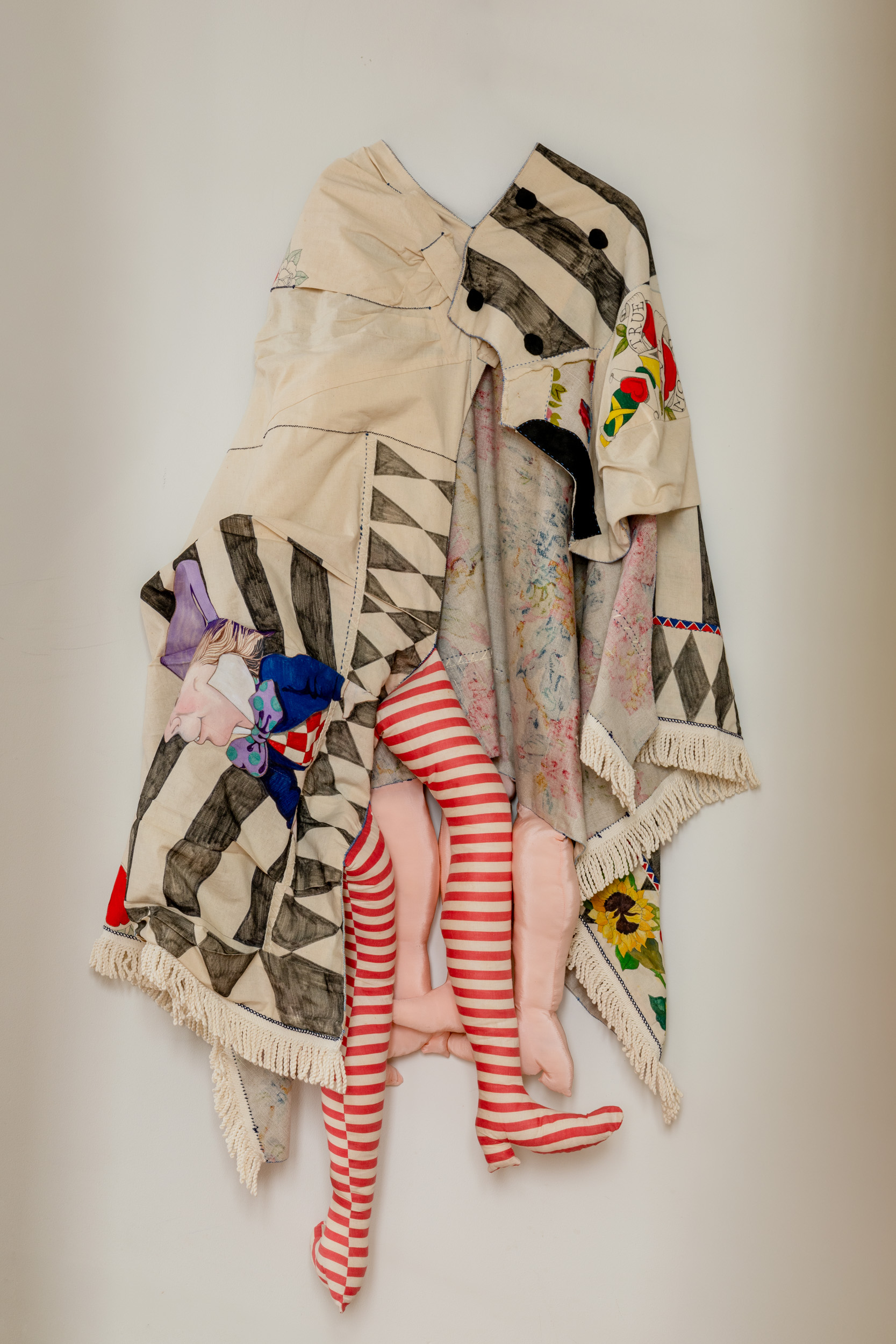
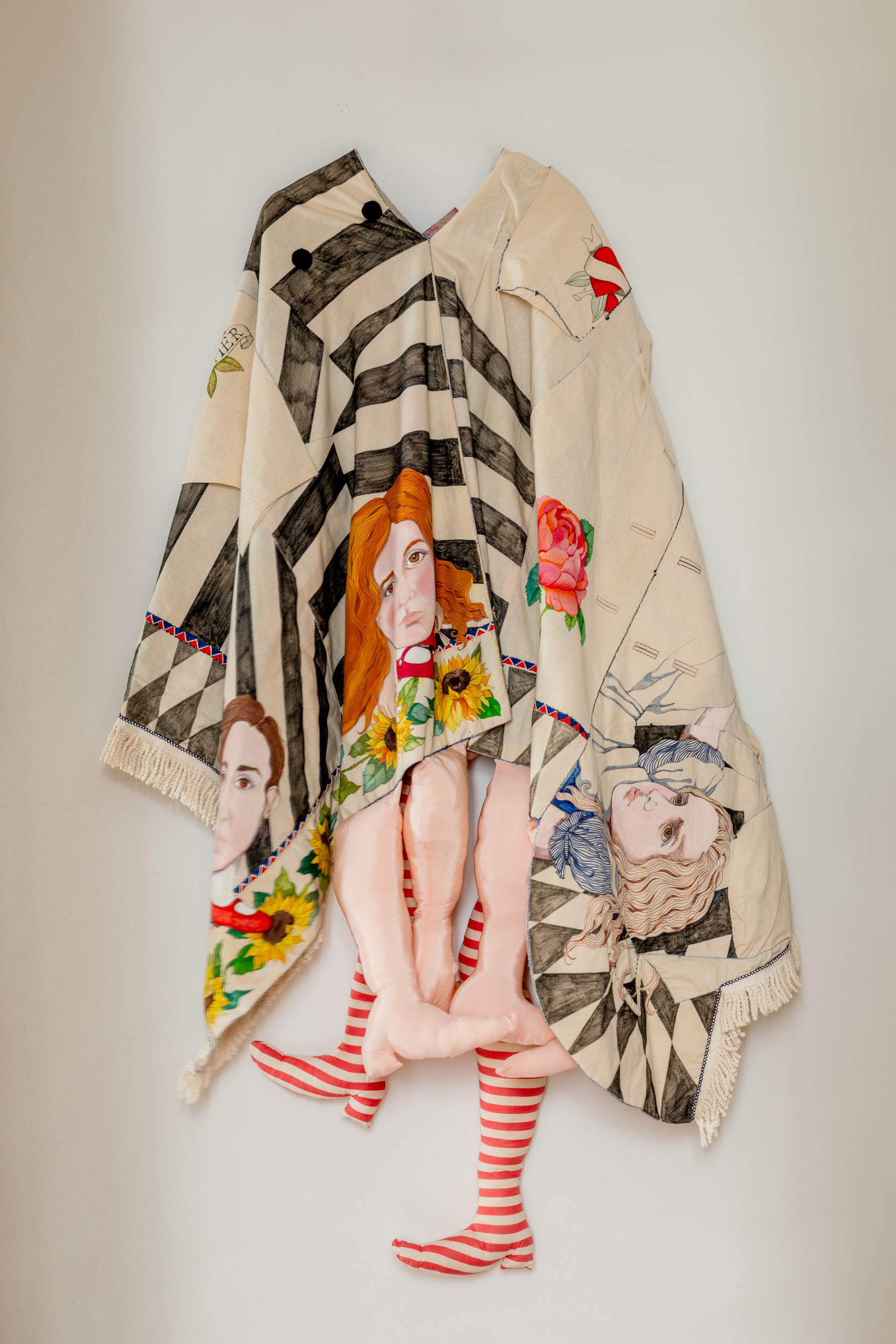
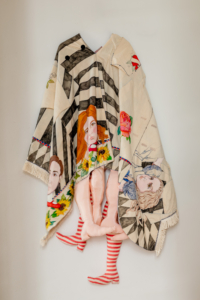
This cape by Rut Olabarri exists within a hybrid territory where the garment ceases to be purely functional and becomes a narrative and sculptural support. Constructed from textile fragments—cottons, printed fabrics, and reworked scraps—the piece unfolds as a surface where drawing, painting, and stitching coexist.
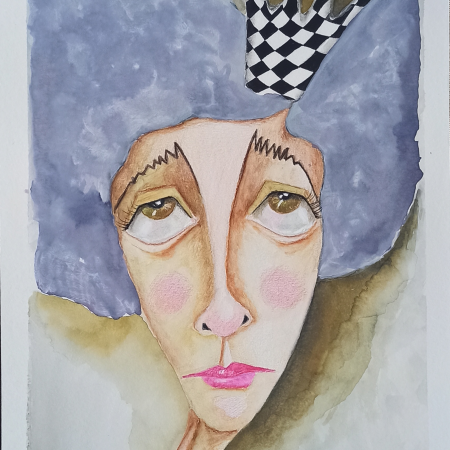
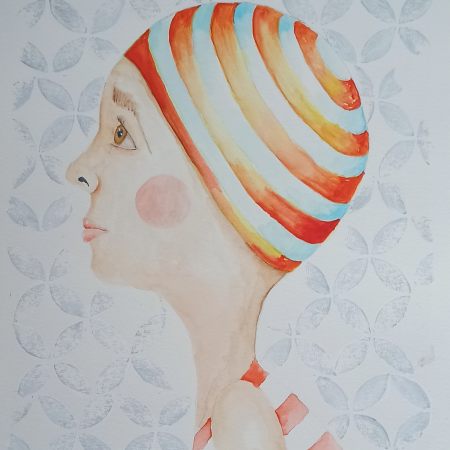
On the light base appear hand-painted faces, flowers, geometric patterns, and fragmented scenes that intertwine without a clear hierarchy. The figures are incomplete: they emerge, are interrupted, and repeat. This approach creates a sense of an open narrative, where identity is built from parts.
One of the most striking elements is the incorporation of soft three-dimensional forms, such as padded textile legs hanging from the interior. This gesture breaks the two-dimensionality of the fabric and shifts the piece toward sculpture, introducing volume, weight, and a certain sense of strangeness.
Visible seams and unfinished edges reinforce the process-driven nature of the work. There is no intention to conceal its construction; on the contrary, the act of making—sewing, cutting, layering—is an essential part of its language. The cape thus presents itself as an object in constant negotiation between the intimate (what is worn, what covers) and the public (what is shown, what is exhibited).
In Rut Olabarri’s practice, textiles function both as archive and as body. This piece, closer to sculpture than to clothing, proposes a reflection on fragmented identity, memory, and the representation of the body. Hung on a wall or installed in space, it maintains a powerful and ambiguous presence: it is not worn, yet retains the memory of having been conceived for the body.
This post is also available in: Spanish