

Description
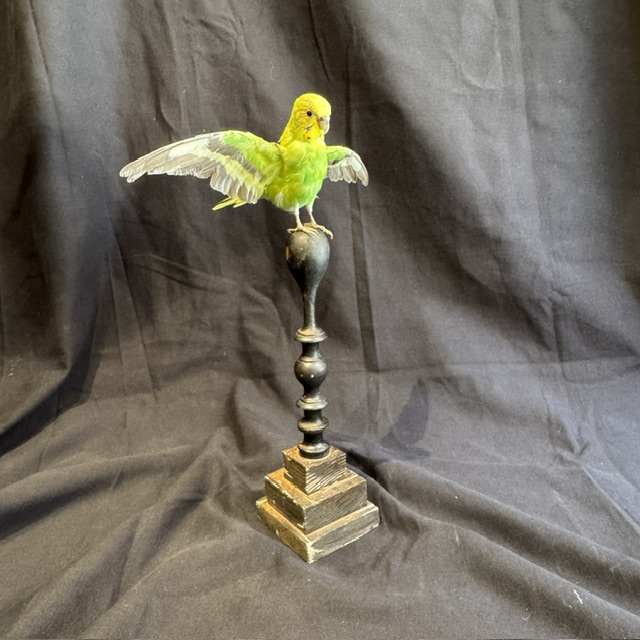
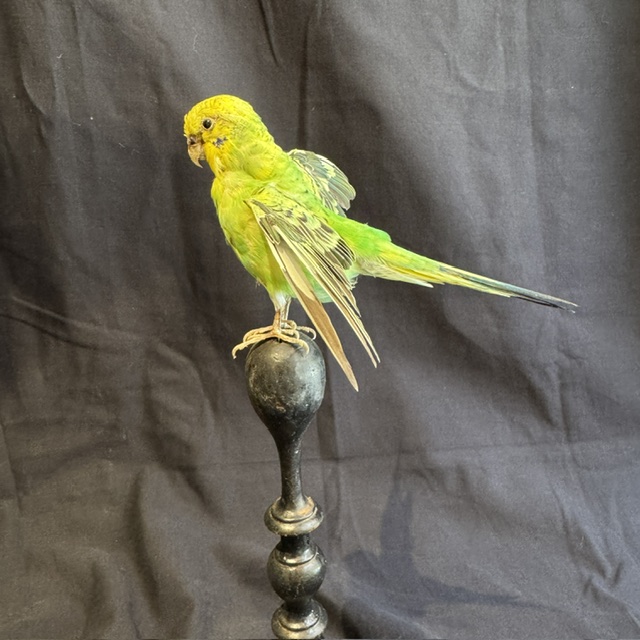
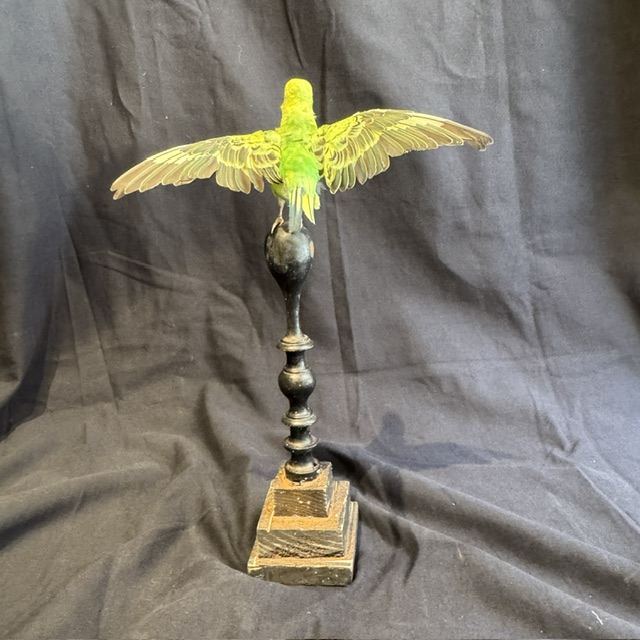
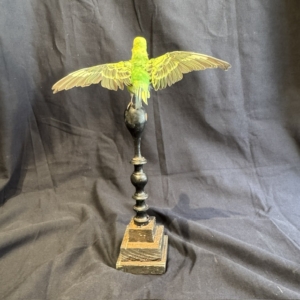
This small naturalised budgerigar captures a moment of extraordinary lightness. With its wings open and its body slightly leaning forward, the composition conveys the sensation of flight suspended in time, as if the bird had only just alighted on the pedestal for a fleeting instant.
The vivid plumage, in shades of green and yellow characteristic of the species, brings brightness and freshness to the piece. Each feather retains the richness of its natural tones, while the carefully studied posture enhances the expressiveness and dynamism of the composition.
The figure is presented on a refined turned wooden pedestal of classical inspiration, which elevates the bird and emphasises its sculptural quality. The sobriety of the base contrasts with the vibrancy of the plumage, creating an elegant balance between nature and decorative object.
During the 19th and early 20th centuries, this type of taxidermy formed part of natural history collections, bourgeois interiors and cabinets of curiosities, where it would be displayed alongside minerals, shells, fossils and other objects intended to inspire observation and fascination with the natural world.
Beyond its scientific interest, this piece has a remarkable aesthetic sensitivity. Its modest scale and delicate composition make it an especially versatile decorative element, able to sit beautifully in a library, display cabinet, on a desk or within a collection of antiques.
Far from being merely a taxidermy specimen, this budgerigar is a small naturalistic sculpture that celebrates the fleeting beauty of nature and evokes the spirit of those collections in which art, science and curiosity coexisted in perfect harmony.
This post is also available in: Spanish