

Description
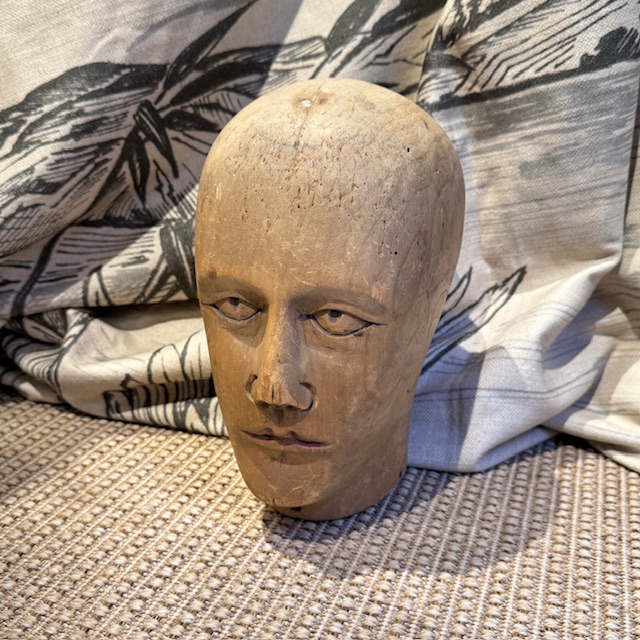
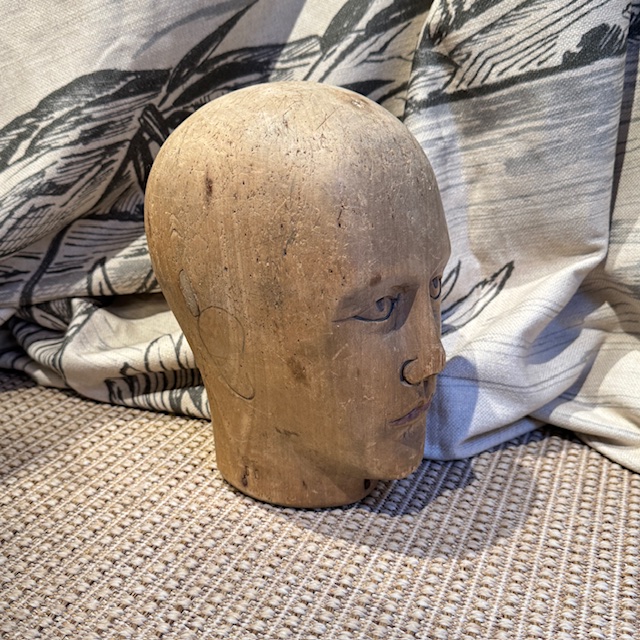
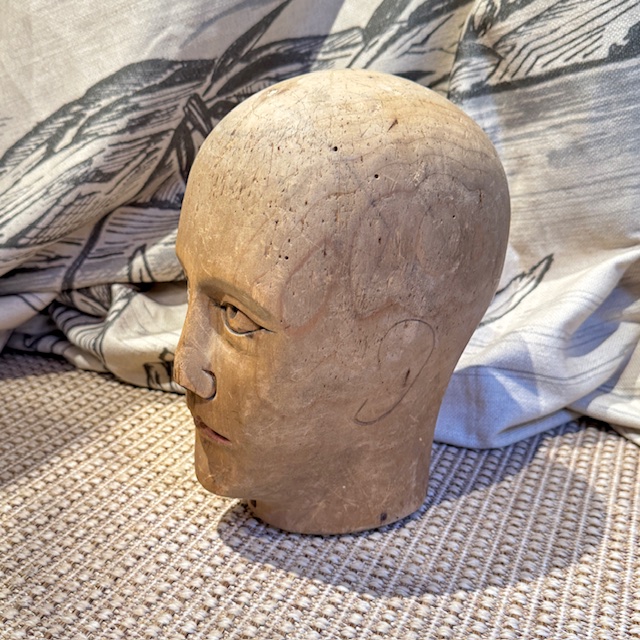
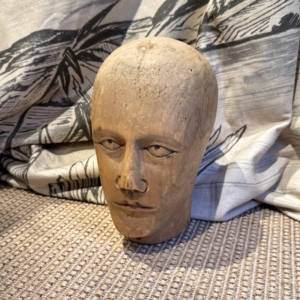
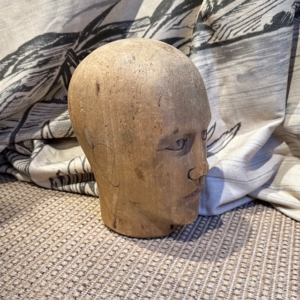
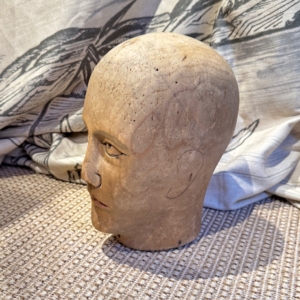
This second millinery head moves to a slightly different rhythm. The wood—lighter in some areas, darker in others—holds a map of fine lines and tiny marks, as if every tool that touched it left behind a quiet trace. The face feels more elongated, more refined, almost as though it were carved on a day when the workshop light fell differently across the bench.
Millinery heads have always lived somewhere between tool and sculpture. This one, in particular, suggests a different past from the first head: perhaps it belonged to a workshop where the hats were more experimental, or maybe it accompanied an apprentice learning how to measure proportions and fabric tension. No one can say for sure, but that uncertainty is part of its charm.
Its expression—more neutral, more introspective—gives the piece a softness that contradicts the hardness of the wood. Small marks and pinholes appear like a constellation across its surface. Instead of diminishing it, they deepen its character, reminding you that an object can grow old with dignity and carry its history without disguises.
Placed in a contemporary interior, it feels almost like a domestic archaeological find: a face unearthed from another time, standing quietly on a shelf or sideboard. It doesn’t explain itself; it simply keeps you company. And that quiet companionship is sometimes the rarest thing an object can offer.
This post is also available in: Spanish