

Description
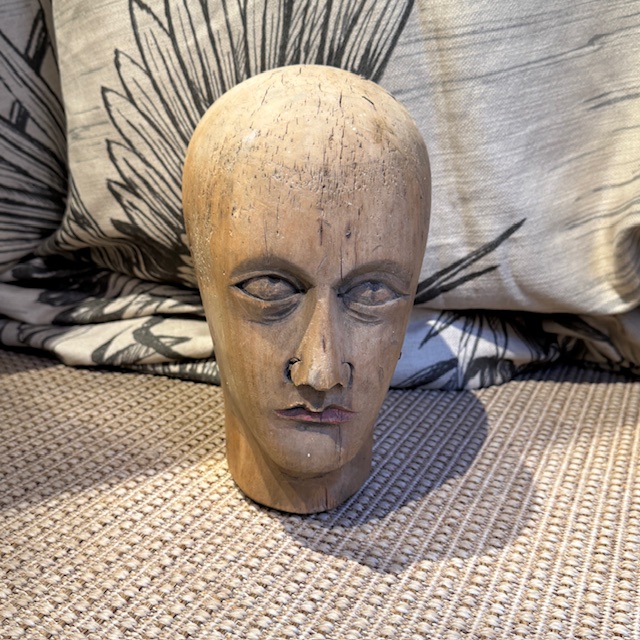
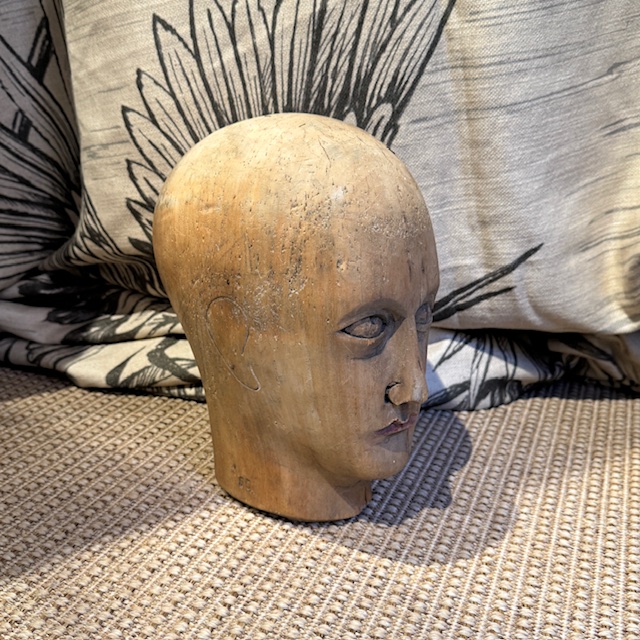
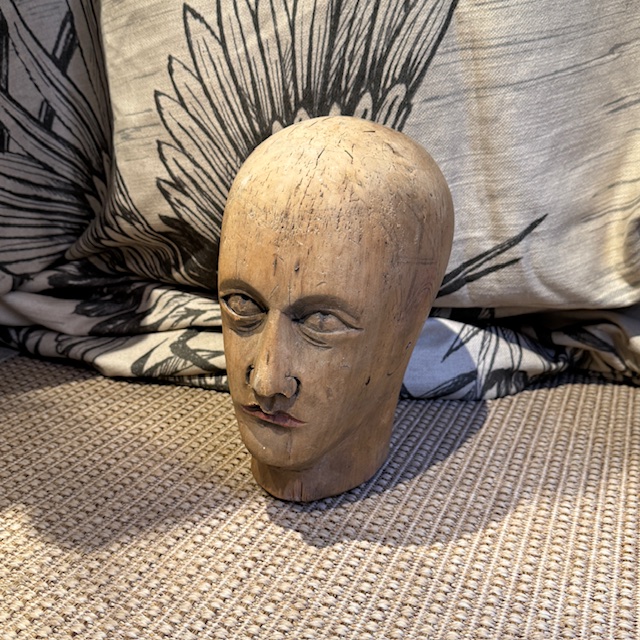
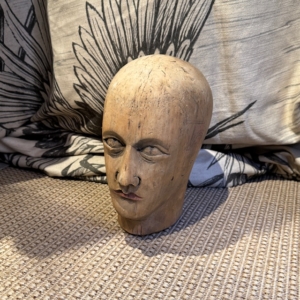
Some objects seem to have learned how to stand quietly on their own. This Swiss millinery head, carved in the late 19th century, carries that kind of stillness —the kind that arrives only when wood has spent more than a century observing the world without asking for attention.
Up close, time reveals itself through tiny dents and soft cracks, as if the workshop where it once lived had left its memory etched into the surface. I imagine a Brienz craftsman —in that town where woodcarving is almost a second language— working without strict plans, letting intuition guide the chisel until the face finally appeared. And it appeared just like this: restrained, slightly solemn, with a gaze that seems to follow you for a moment before retreating back into silence.
Originally, it served as a tool. It held hats, veils, and textile experiments in a workshop that perhaps smelled of damp wool and fresh shavings. Now, when you hold it, that function fades and something else emerges: a small accidental sculpture, the kind born out of necessity that later turns into art without meaning to.
Placed on a shelf or console, it changes the atmosphere of a room without raising its voice. There is something human in it, something fragile, something that reminds you the hands that made it are long gone. And maybe that’s why it’s so easy to keep looking at it a little longer than expected.