Description
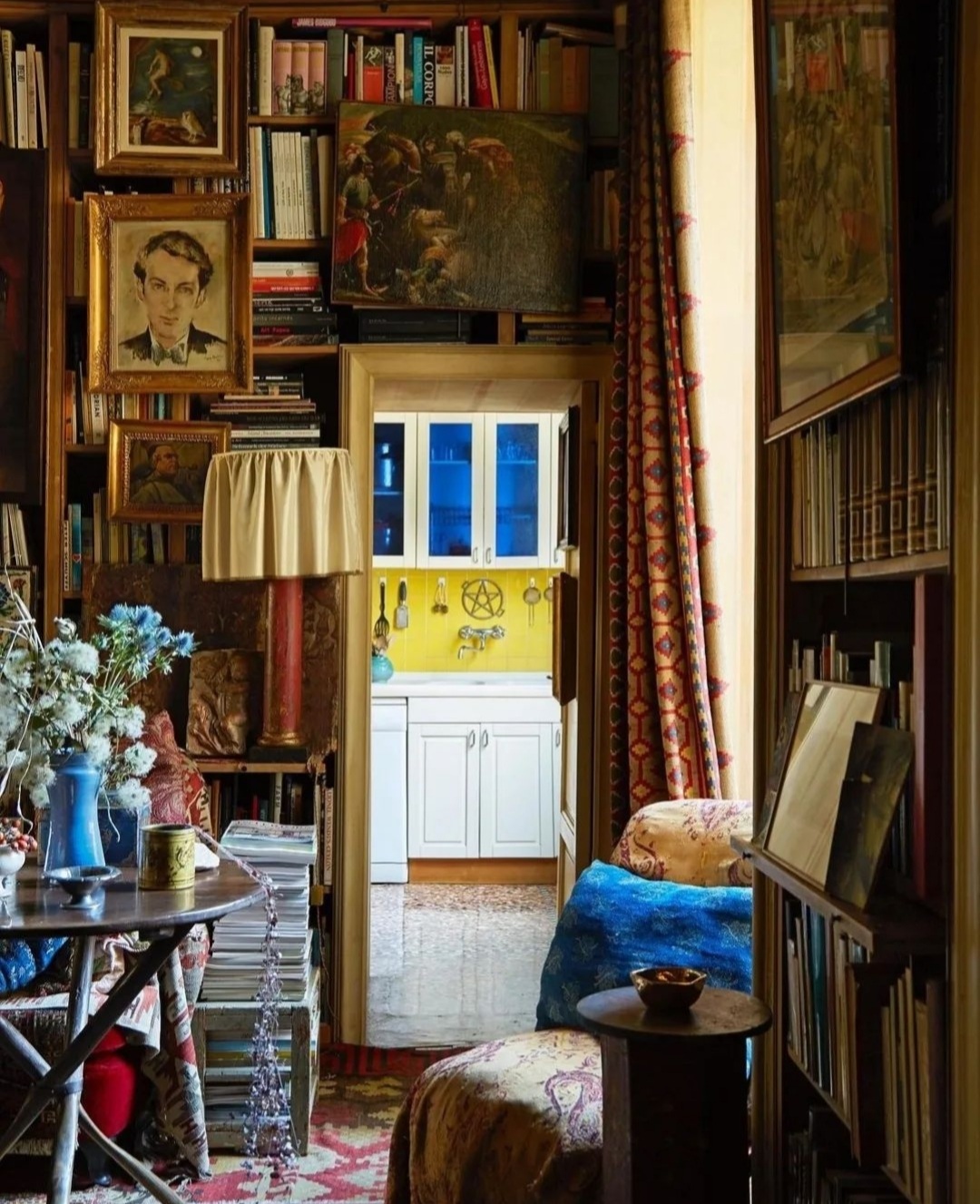
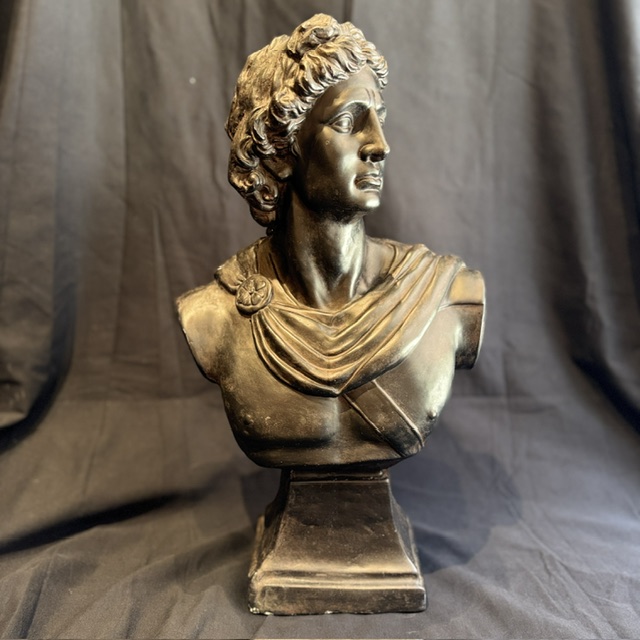
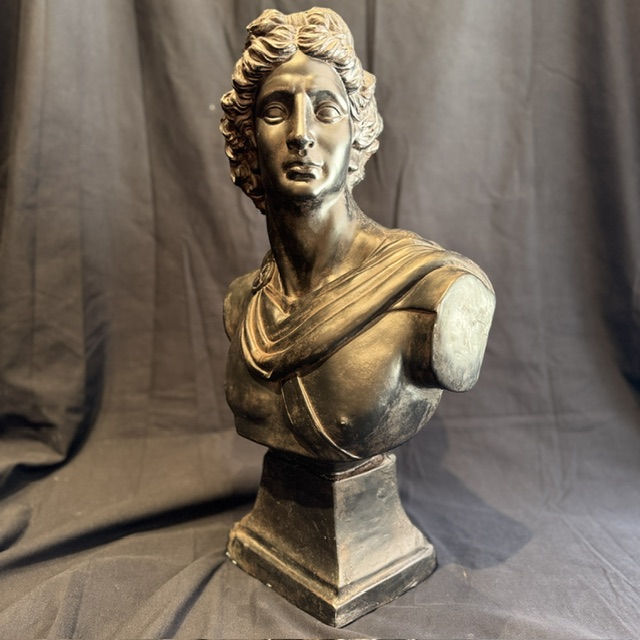
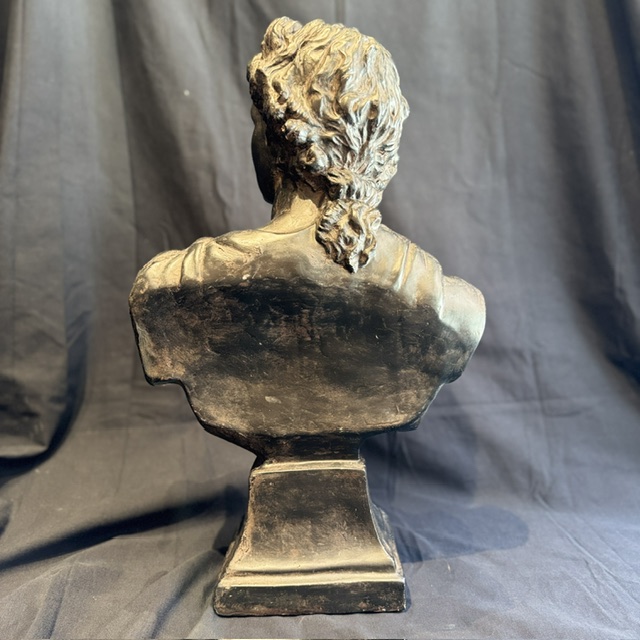
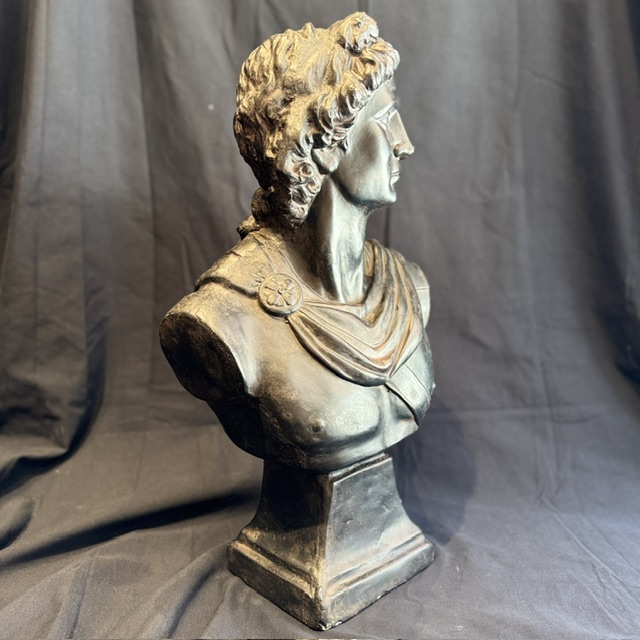
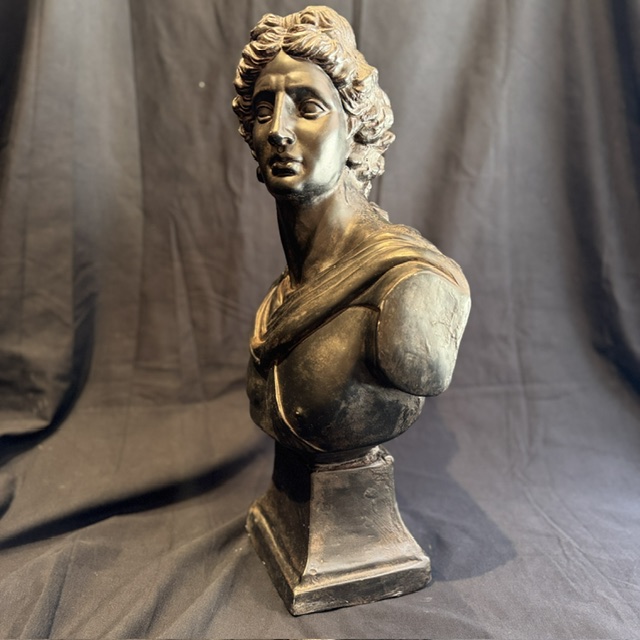
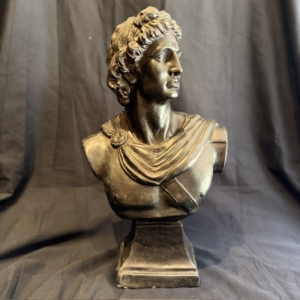
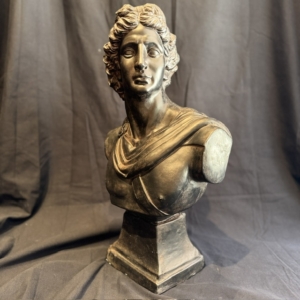
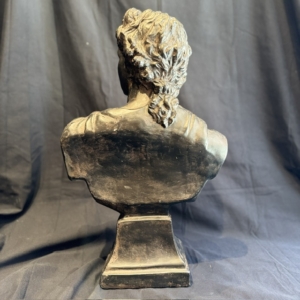
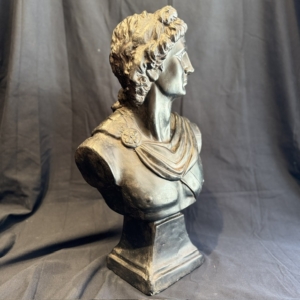
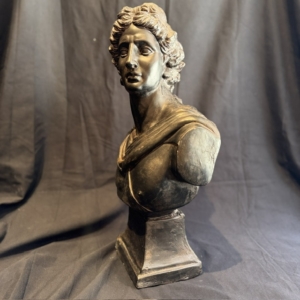
This bust draws upon the sculptural traditions of Classical Antiquity, portraying an idealised male figure with harmonious features, a serene expression, and a balanced composition. The gently turned head and carefully modelled wavy hair introduce a sense of movement to a work conceived according to the principles of harmony and proportion that defined Greco-Roman art.
The torso is draped in a broad, flowing cloak that crosses diagonally over the chest, creating a refined interplay of light and shadow. The absence of the arms—a characteristic shared by many classical sculptures that have survived to the present day—is not perceived as a loss, but rather as an element that reinforces its sculptural power and recalls the fragmentary beauty that has fascinated artists and collectors since the Renaissance.
The restrained pedestal elevates the figure and strengthens its architectural presence, allowing the sculpture to engage with its surroundings through elegance, balance, and proportion.
Beyond its historical inspiration, this bust functions as a decorative object of remarkable character. Its timeless visual language allows it to sit effortlessly within both classical interiors and contemporary spaces, introducing a subtle dialogue between the purity of ancient forms and modern aesthetics.
Placed on a console table, library shelf, or pedestal, it naturally becomes a focal point. More than a decorative sculpture, it is an evocation of the Classical ideal—a piece that reminds us how beauty, proportion, and serenity have remained universal values throughout the centuries.
This post is also available in: Spanish