

Description
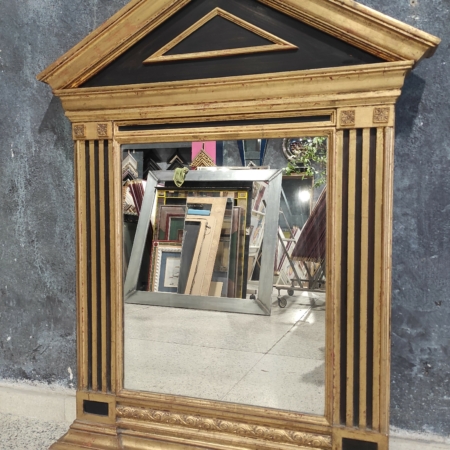
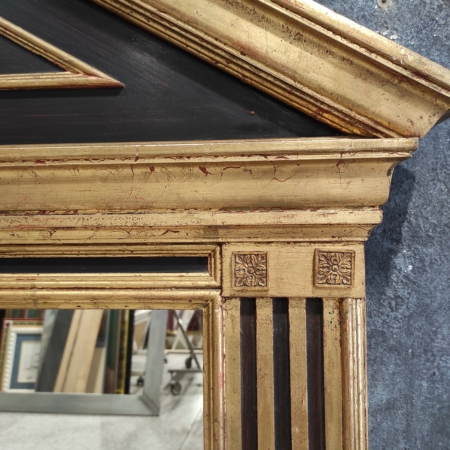
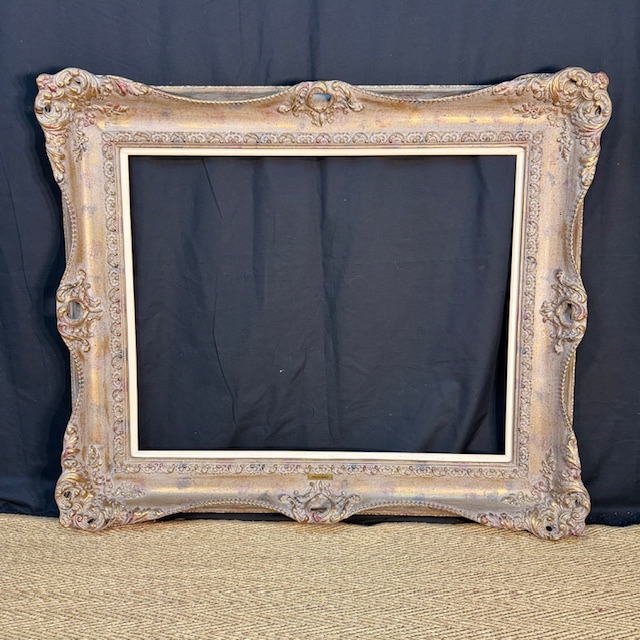
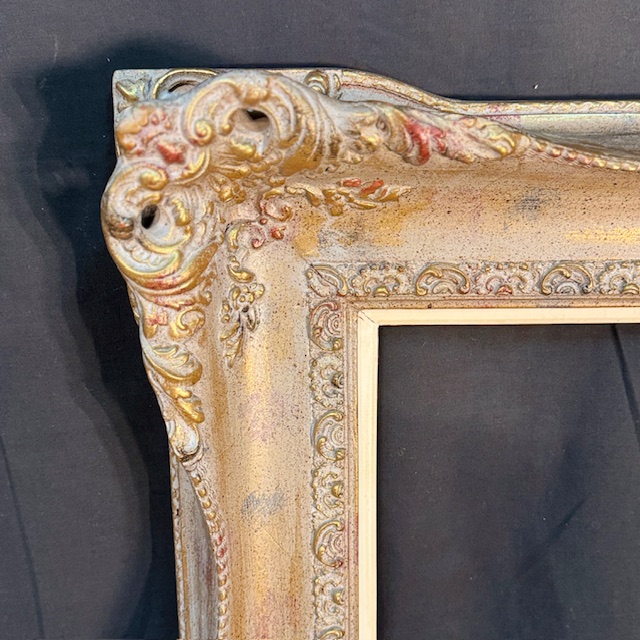
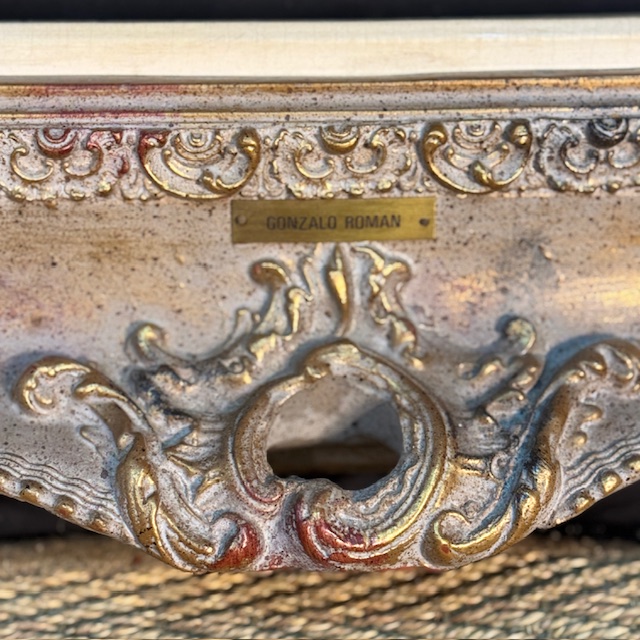
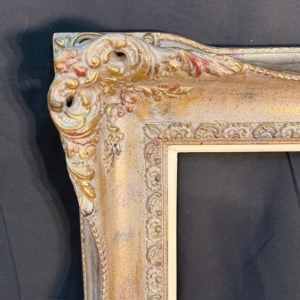
The eye is drawn first to the carving rather than the color. The wood is worked in deep relief, creating a rhythm of curves and recesses that catch the light unevenly. This is not a flat surface but a tactile one, closer to architecture than ornament.
The painted finish settles gently into the carving. Soft, muted tones sit beneath discreet gilded accents that appear along edges and raised details, never dominating, always supporting the form. The gold is not meant to shine loudly; it registers instead as a trace of an earlier intention, now mellowed by time.
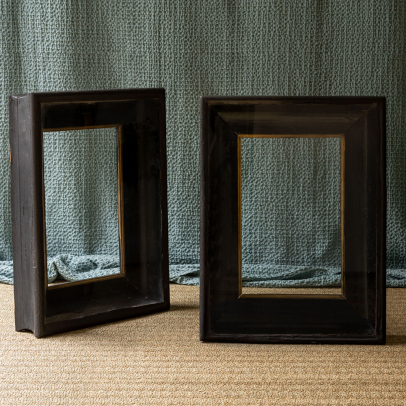
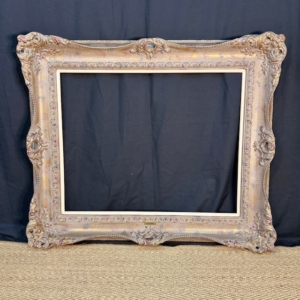
At this scale—107 × 89 cm—the frame was conceived as an integral part of what it holds. Historically, frames of this type were not neutral borders but active participants in the composition, mediating between artwork and wall, image and room. That sense remains intact. Even empty, the frame holds its own.
In contemporary spaces, it works surprisingly well as an object in its own right. It can frame a painting, a drawing, a textile—or nothing at all. Hung on a wall or leaned casually, it introduces a pause, a change in tempo, something that asks for a slower look.
This post is also available in: Spanish