







Description
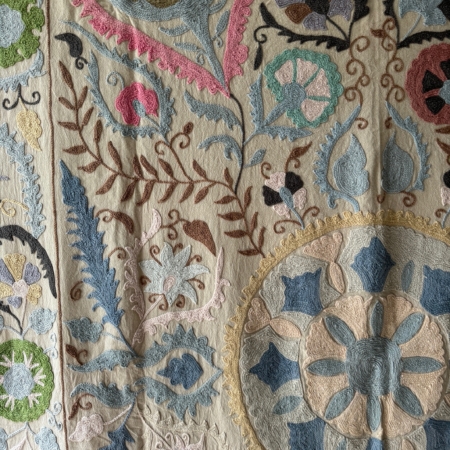
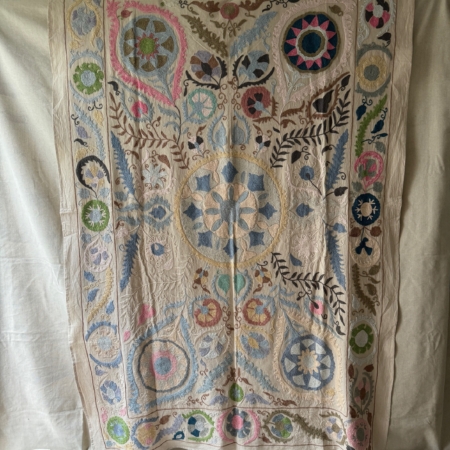
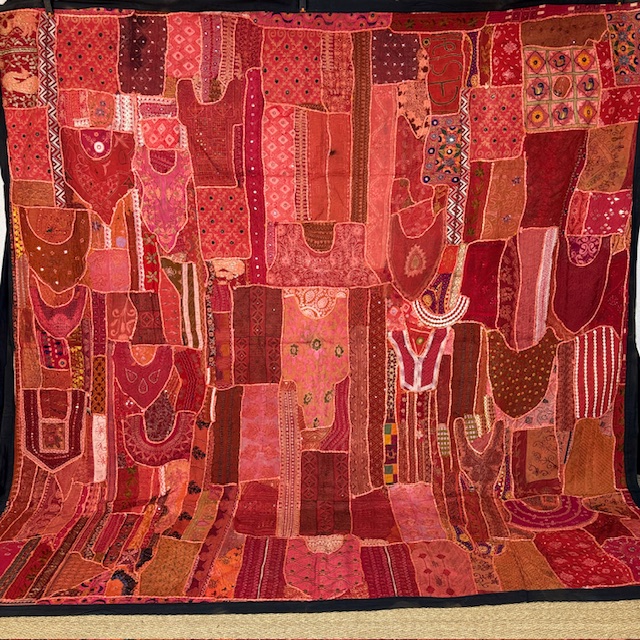
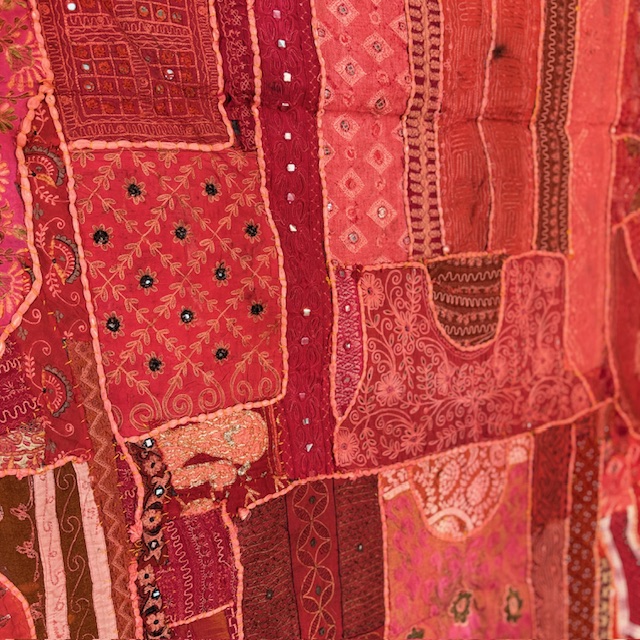
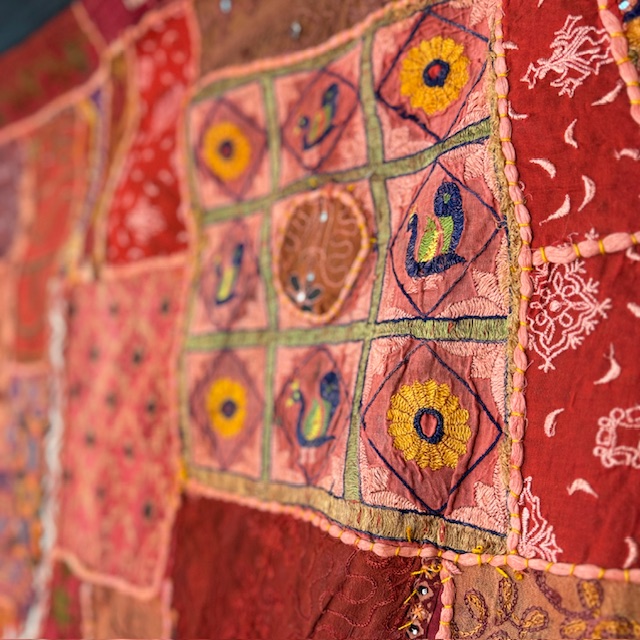
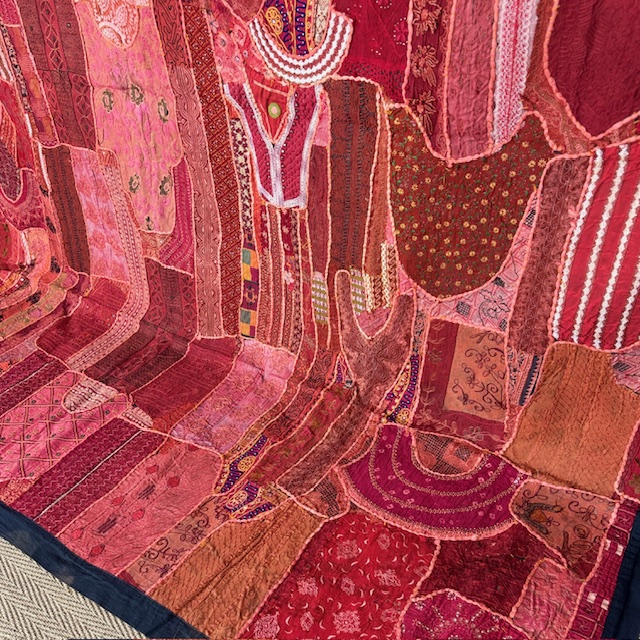
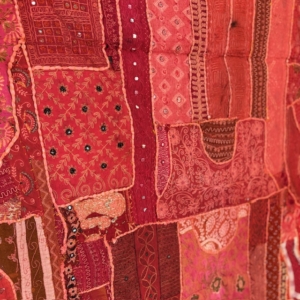
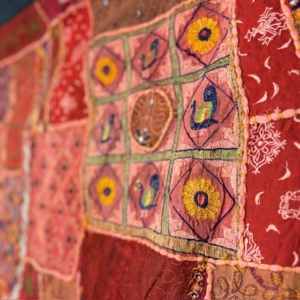
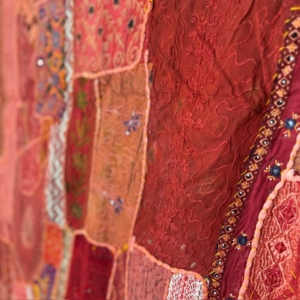
This extraordinary tapestry comes from Gujarat in western India, a region renowned for its rich textile heritage and the remarkable craftsmanship of its embroidery traditions. The piece is created using the patchwork technique, assembling numerous fragments of antique embroidered and decorated fabrics that together form a vibrant and deeply expressive composition.
Each section of the tapestry preserves traditional textile motifs, small embroidered details, and variations in fabric that reflect the aesthetic diversity of the region. The dominant tones—reds, burgundies, and pinks—create a warm and enveloping ensemble characteristic of many festive textiles from western India.
In the region of Kutch, in Gujarat, this type of embroidery has been part of daily and ceremonial life for centuries. Decorated fabrics were used in celebrations, in the ornamentation of homes, and in ritual contexts. Women within the communities passed embroidery techniques from generation to generation, creating pieces that combined artisanal skill, cultural identity, and family memory.
The patchwork technique adds another meaningful dimension: different textile fragments—many originating from garments or older fabrics—are carefully assembled to form a new composition. This process makes each tapestry unique, where variations in texture, colour, and embroidery tell a collective story.
Thanks to its visual richness and singular character, this tapestry works both as a striking decorative piece and as an example of traditional Indian textile art. Hung on a wall, it brings depth, colour, and a strong cultural presence to any space.
An exceptional piece that brings together tradition, history, and artisanal mastery in a single textile.
This post is also available in: Spanish