

Description
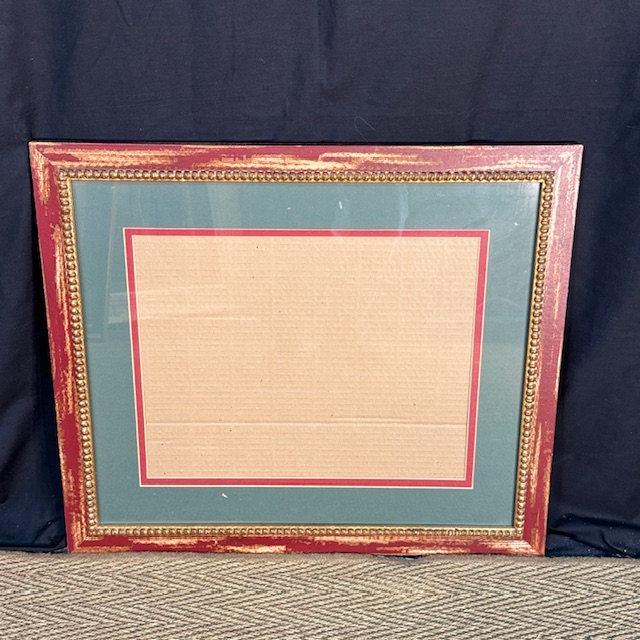
Some frames seem to have been discreet from the beginning. Others, like this one, must have once hung on a wall where the light entered decisively and color mattered.
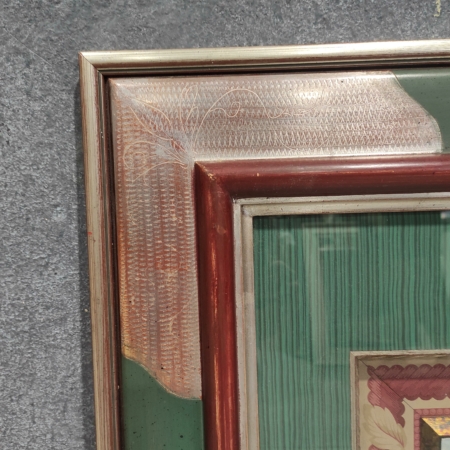
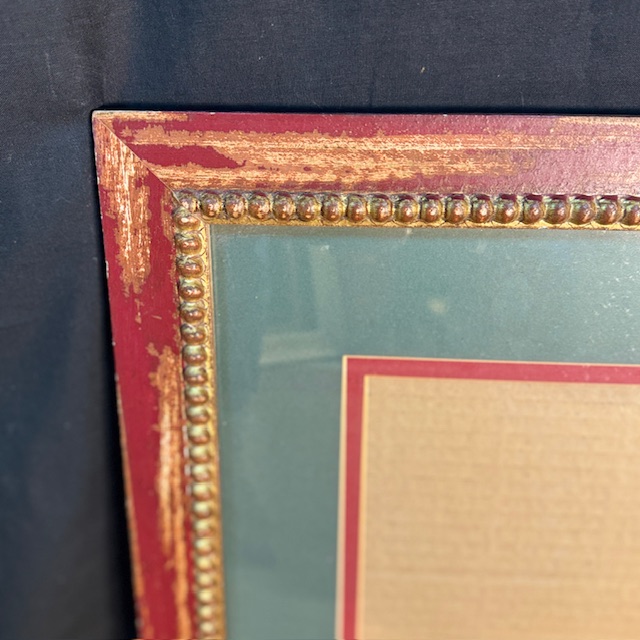
The wood is coated in a deep red layer, now softened by time. The wear is neither uniform nor staged: areas where gilding emerges beneath the paint, edges polished by handling, small losses that reveal the structure below. The surface has a quiet topography to it; the kind that invites a closer look, even the impulse to trace it with a fingertip.
Inside, a rhythmic gilded beaded moulding marks the transition toward the mat in green-grey and red. The palette feels deliberate. It recalls interiors in which color was used to build depth and contrast—not merely to accompany an artwork, but to construct a complete visual setting on the wall.
For centuries, frames were objects of prestige. Specialized workshops competed in gilding, carving, and polychromy, producing works that conversed with both architecture and painting. This example belongs to that more theatrical domestic tradition: conceived to hold an image, certainly, but also to sustain an atmosphere.
Its proportions make it suitable for prints, drawings, or small paintings. It can also function empty—leaned on a console or incorporated into a gallery wall—where its red surface introduces a deliberate note of warmth and contrast.
In our antiques shop, we select antique and vintage frames that retain not only their structure but their visible history. This one does not conceal the passage of time; it carries it openly.
This post is also available in: Spanish