

Description
One might assume that the frame is an afterthought—added by a later owner to protect the painting and secure it to the wall. Yet historically, frames were conceived with as much care and expense as the works they enclosed. Architects, sculptors, and master gilders designed them as miniature architectures, and there were periods when a frame could cost as much as—if not more than—the painting itself.
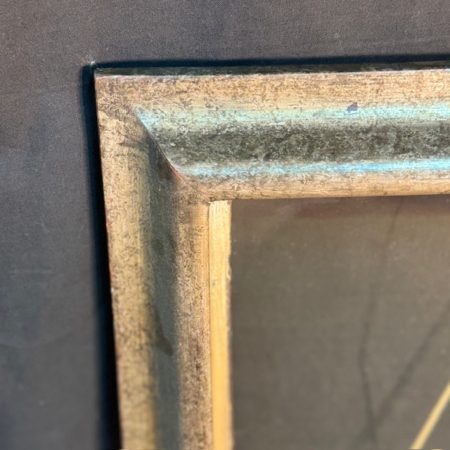
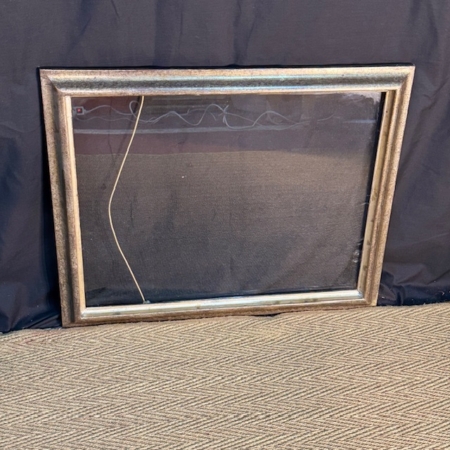
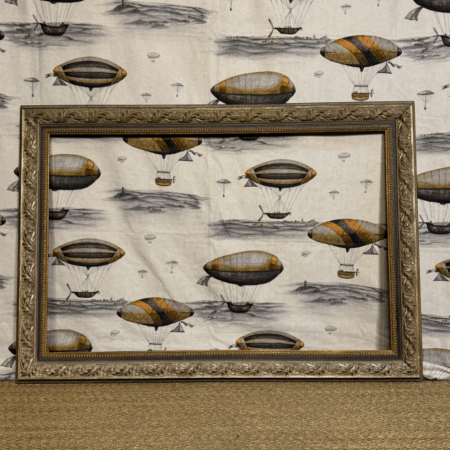
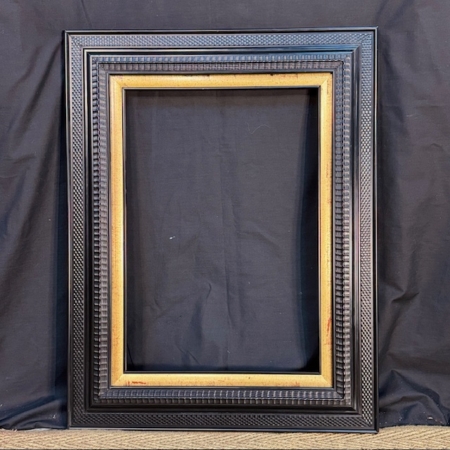
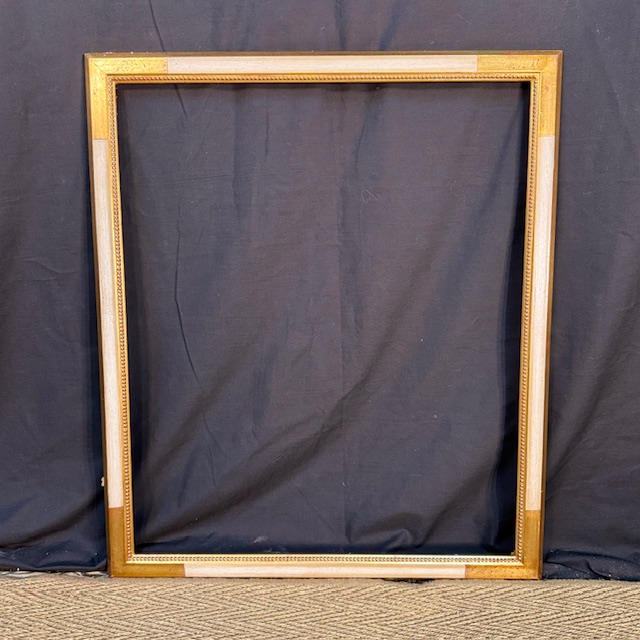
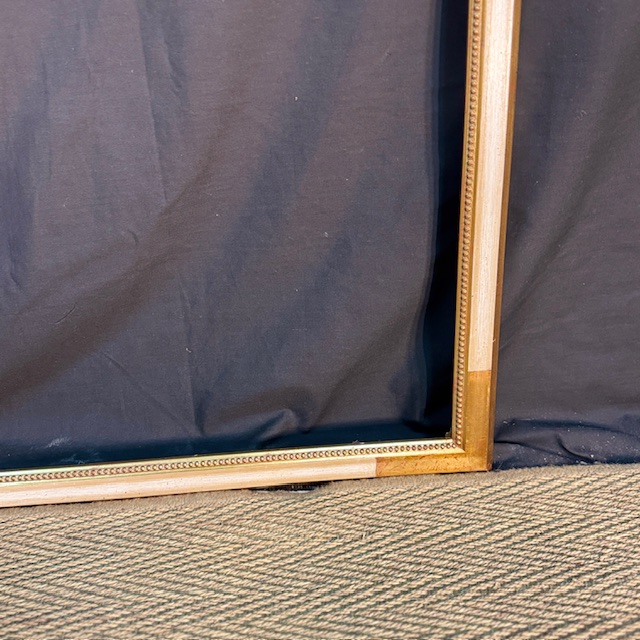
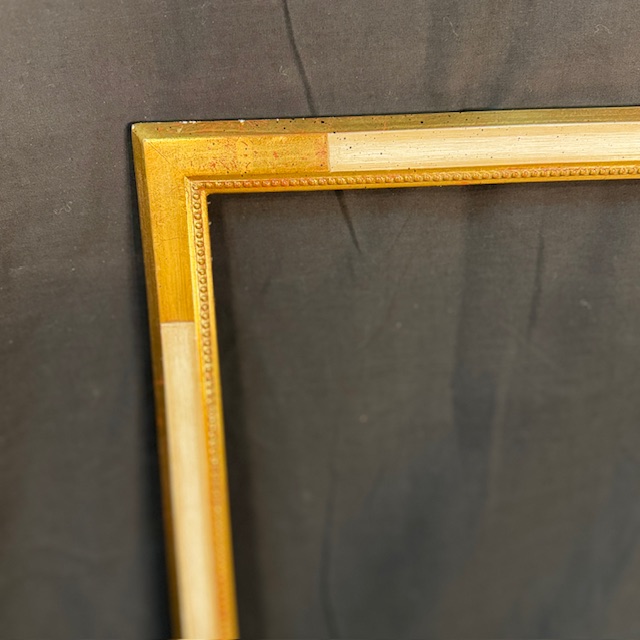
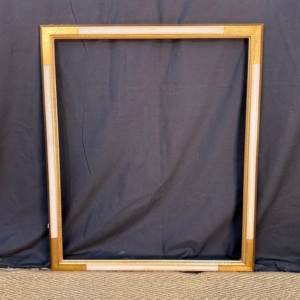
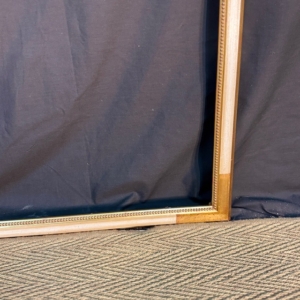
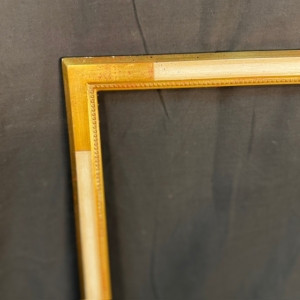
This example, measuring 61.5 x 72 cm, belongs to that tradition. Constructed in giltwood, it features deliberate tonal variations where lighter sections interrupt the gold surface, quietly revealing the craftsmanship of its assembly. The surface is not uniform. Subtle shifts in color, visible joints, and the gentle wear of time speak of workshop practices and decades of presence.
The outer profile remains restrained, almost architectural in its discipline. It is along the inner edge that refinement asserts itself: a carved beaded molding runs along the sight edge, forming a delicate visual boundary between the viewer’s space and the pictorial field. That rhythmic line of pearls casts a soft shadow, subtly intensifying whatever image it frames.
Frames such as this were designed not merely to hold but to converse with the artwork. It pairs particularly well with antique engravings, academic portraits, lithographs, or even contemporary works that benefit from the structure and gravitas of a classical surround.
Today, frame history is an established and growing field of study. Pieces like this remind us that the border is never incidental—it is integral to the act of seeing.
This post is also available in: Spanish