

Description
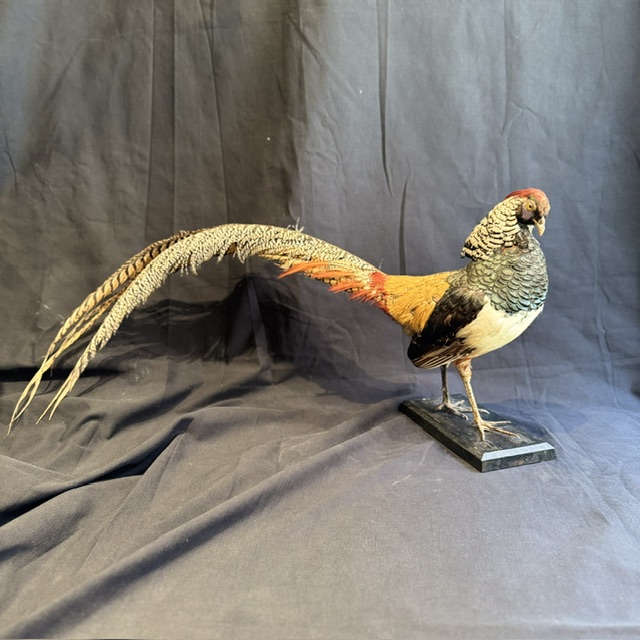
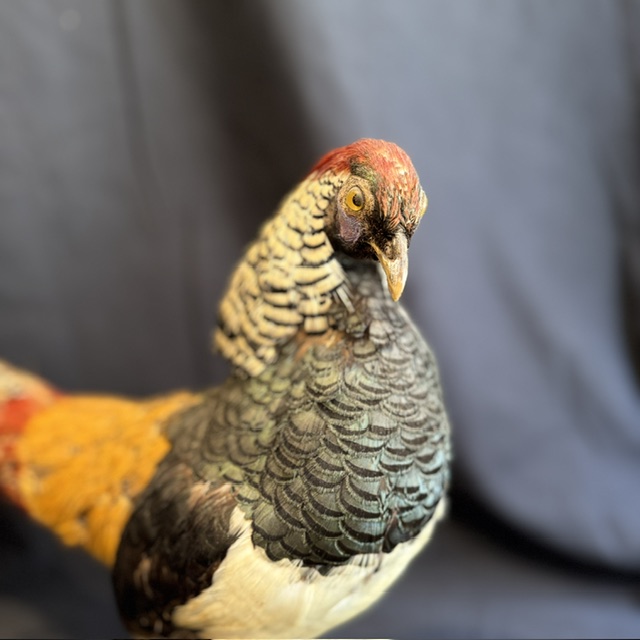
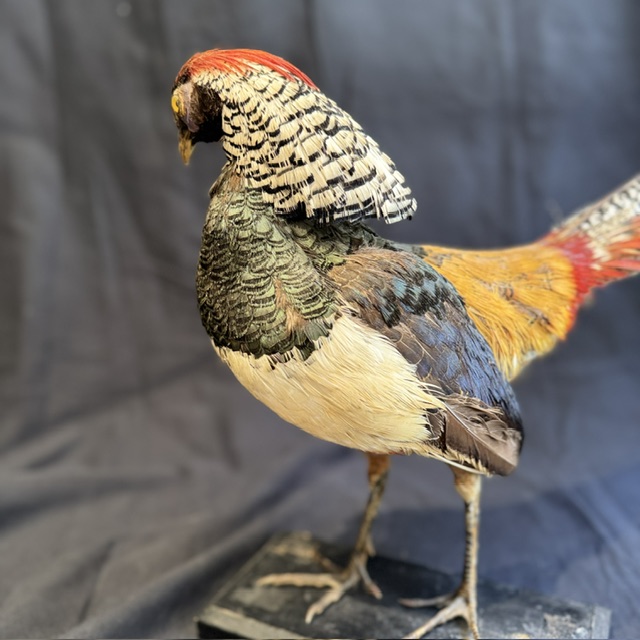
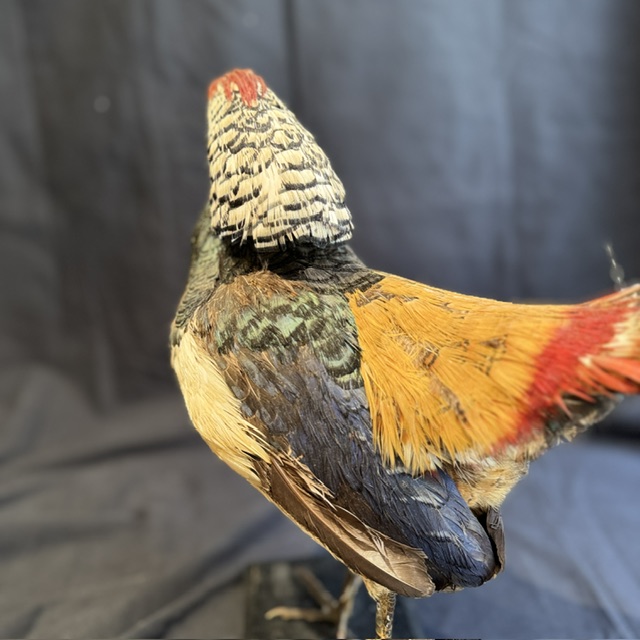
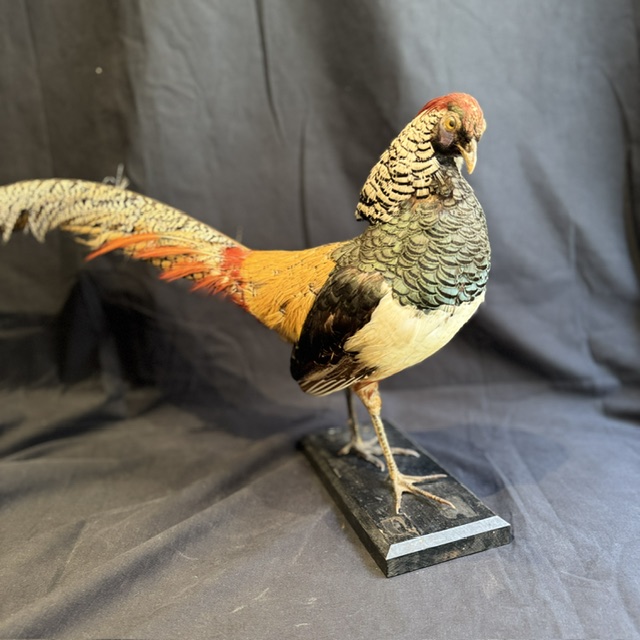
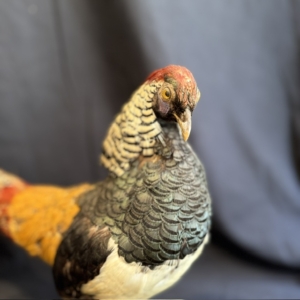
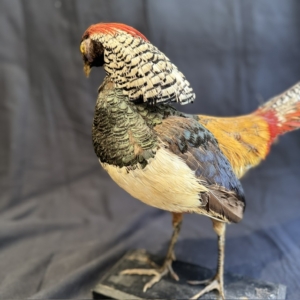
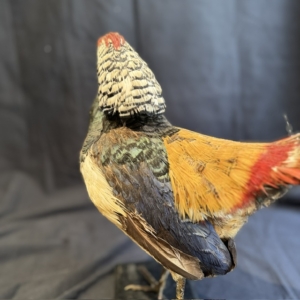
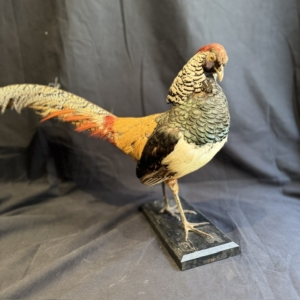
This taxidermy pheasant stands out for the extraordinary elegance of its silhouette and the remarkable richness of its plumage. Warm copper tones, iridescent greens, crisp whites, and deep blacks flow naturally across the bird’s body, while its impressively long tail introduces a sense of movement, giving the piece an unmistakable sculptural presence.
Taxidermy, understood as the art of preserving both the anatomy and beauty of the natural world, allows the viewer to appreciate the intricate complexity of every feather, the finely patterned scales of the neck, and the delicate transitions of colour. The result is a work in which scientific precision and aesthetic beauty exist in perfect harmony.
During the nineteenth and early twentieth centuries, specimens of this kind occupied a prominent place in natural history cabinets, libraries, and country houses, forming part of collections where nature, science, and decoration existed in dialogue. Today, these pieces continue to fascinate for their ability to bring a fragment of the natural world into the home.
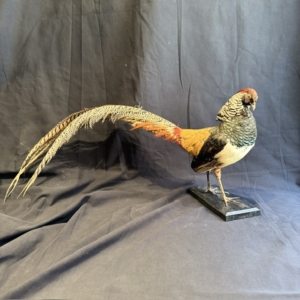
Mounted on a discreet stand, the pheasant retains a calm, dignified pose that highlights the spectacular length of its tail and the elegance of its proportions. Its presence transforms any interior, becoming a striking focal point while preserving the refinement associated with historic natural history collections.
Beyond its decorative appeal, this piece invites contemplation of the extraordinary diversity of the animal kingdom and recalls the tradition of the historic cabinet of curiosities, where art, nature, and knowledge coexisted within the same space. It is a work destined for both collectors of taxidermy and those seeking objects that tell stories while bringing unique character and personality to an interior.