

Description
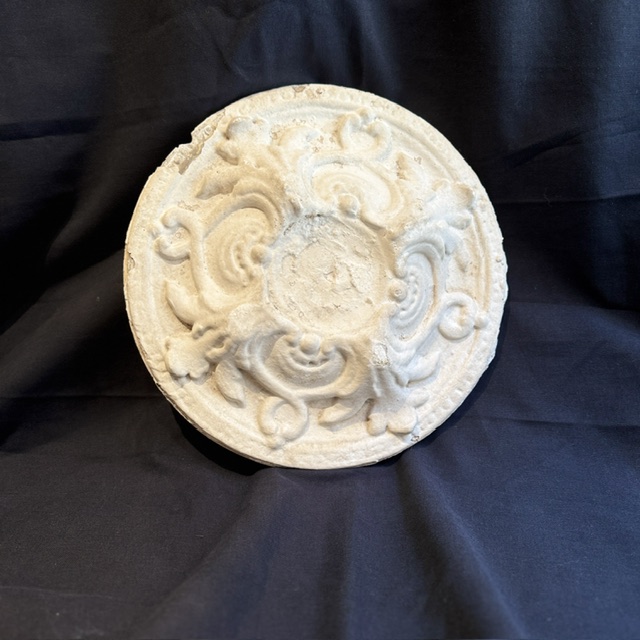
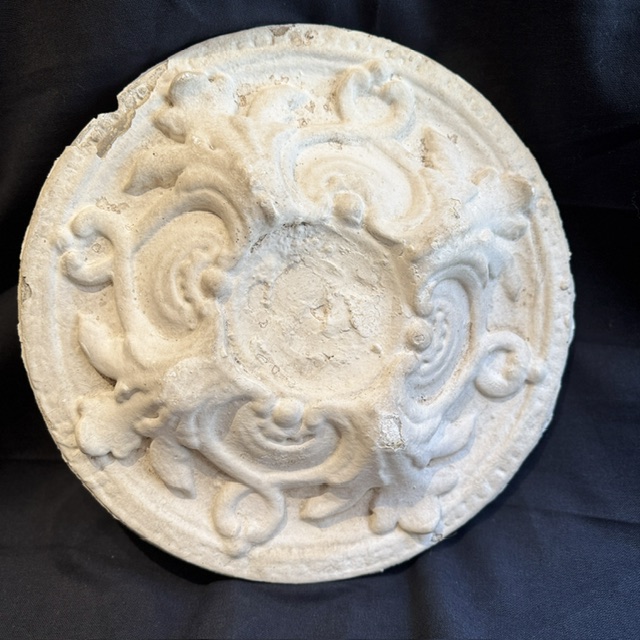
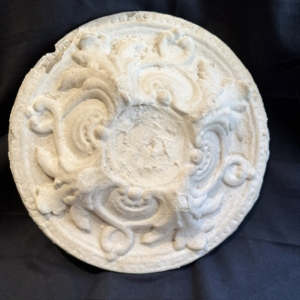
This plaster medallion transcends its original architectural function to become a genuine work of wall sculpture. Originally conceived as a decorative element for ceilings or walls, its composition is organised around a central axis from which an elegant arrangement of scrolls, acanthus leaves, and botanical motifs unfolds, expanding naturally outwards.
Inspired by the classical decorative vocabulary of the Baroque and reinterpreted through the European decorative traditions of the late nineteenth century, the ornamentation achieves a delicate balance between movement and symmetry. Every relief captures the light differently, creating shifting shadows that enhance the depth of the modelling and give the surface a dynamic, almost living quality.
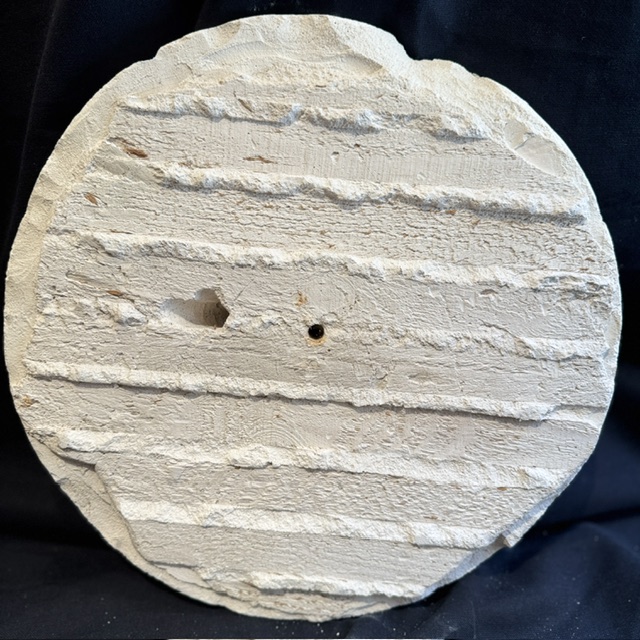
Plaster, a material long associated with ornamental architecture, retains all of its expressive character here. The small signs of age, minor losses, and the patina acquired over time should not be seen as imperfections, but rather as part of the piece’s own history. They are traces that speak of the spaces it once adorned and of the quiet passage of time.
Presented today as an independent object, the medallion takes on a new artistic dimension. Detached from the architecture for which it was created, it can now be appreciated as a sculptural fragment—a decorative relic that preserves the quality of its modelling and the elegance of its proportions.
Displayed on its own, it functions as a striking wall relief with strong sculptural presence. Incorporated into a contemporary interior, it creates a compelling dialogue between the purity of its material and the richness of historic ornament. It is a piece for those who see decoration not merely as the arrangement of objects, but as a way of preserving the memory of architecture and traditional craftsmanship.
This post is also available in: Spanish