

Description
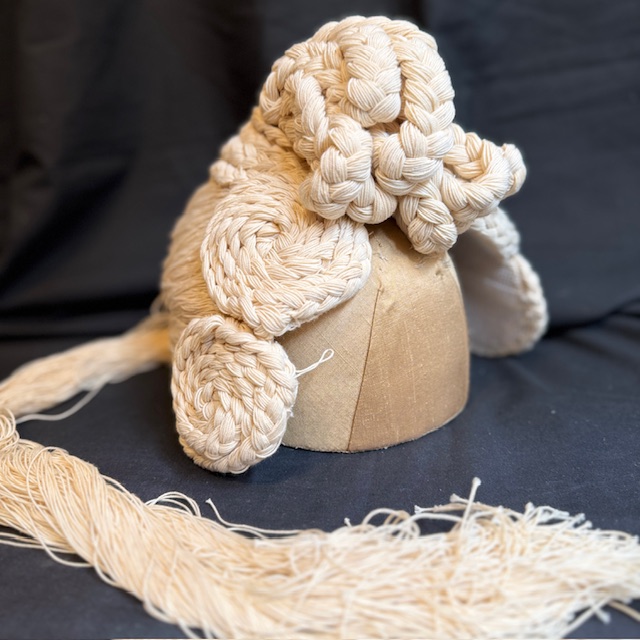
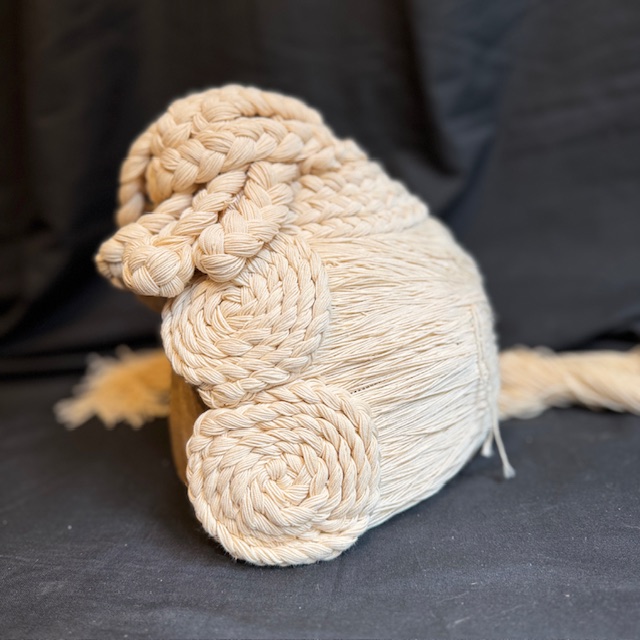
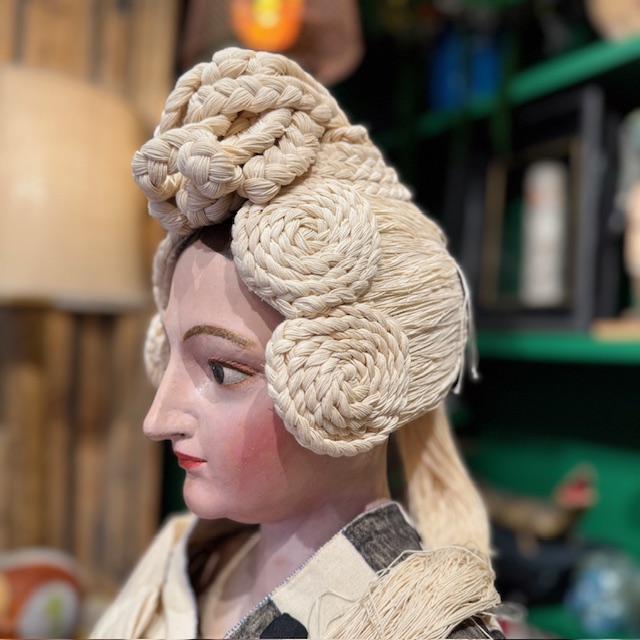
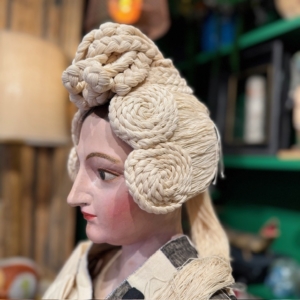
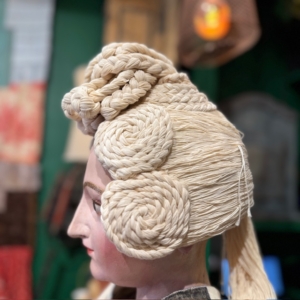
In this work, Rut Olabarri transforms a wig into a sculptural object constructed entirely through braiding and coiling thick textile rope. The result is a voluminous structure that evokes elaborate hairstyles from European history, particularly those associated with the 17th and 18th centuries.
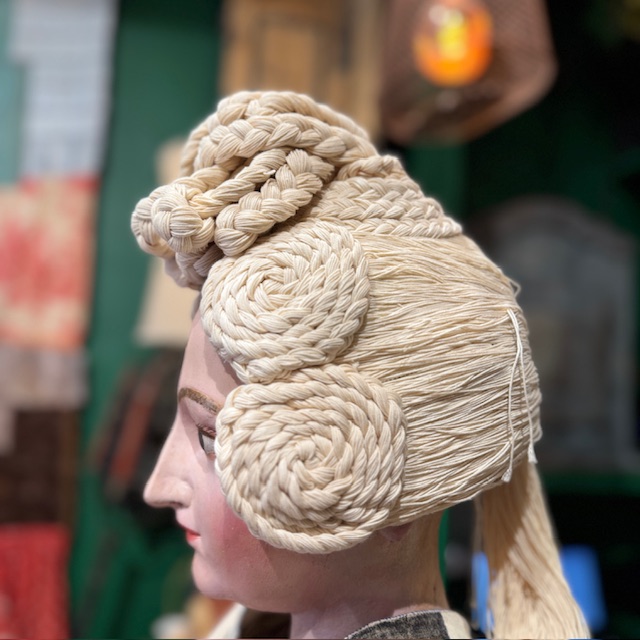
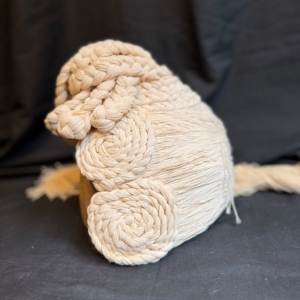
The piece is organized through spirals, rosettes, and compact braids that overlap, generating a complex hair architecture. These volumes recall both courtly hairstyles and ornamental forms typical of the Baroque and Rococo periods.
The raw-colored material with natural texture emphasizes the artisanal character of the work and clearly reveals the construction process. The artist transforms a traditional gesture of textile work—braiding, coiling, knotting—into a sculptural language that builds mass, rhythm, and repetition.
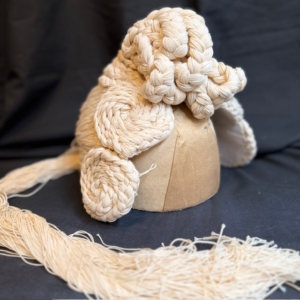
One of the most striking features is the long extension of loose fibers falling from the back, creating a contrast between the structured upper part of the wig and the fluidity of the free material. This detail introduces movement and breaks the rigidity of the compact form above.
The work exists at the intersection of textile sculpture, performative object, and artistic costume, as it references an item originally intended for the body while simultaneously functioning as an autonomous piece. In Rut Olabarri’s practice, textiles thus become a medium for exploring the relationship between body, historical memory, and ornamental construction.
This post is also available in: Spanish