Description
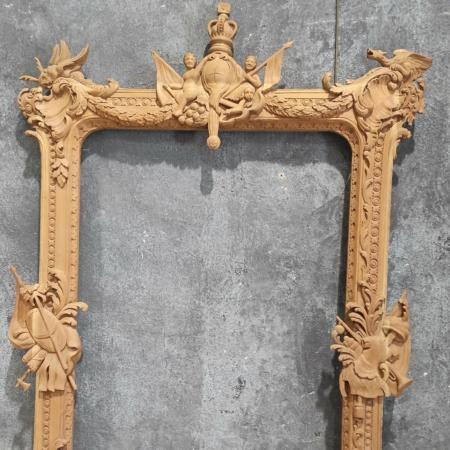
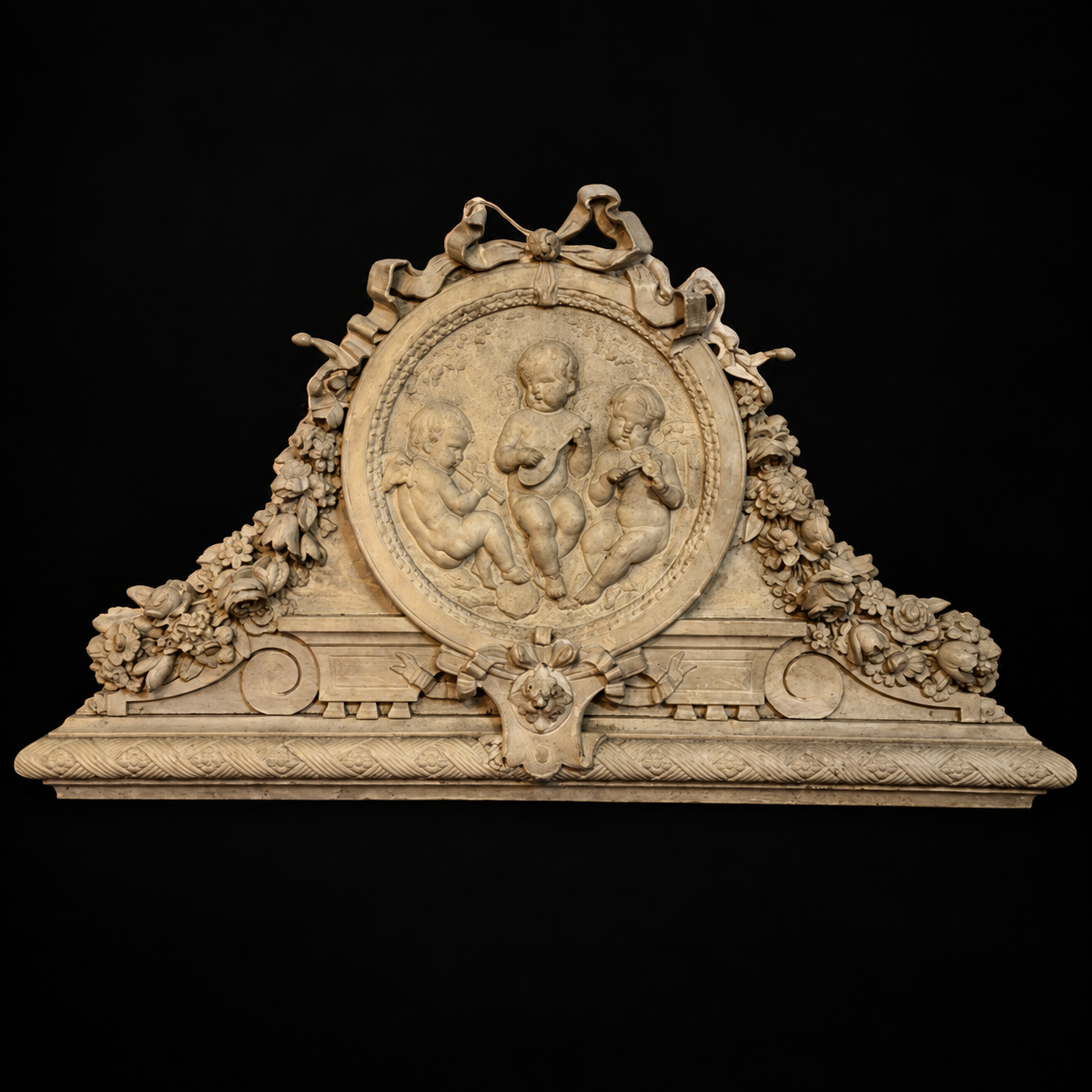
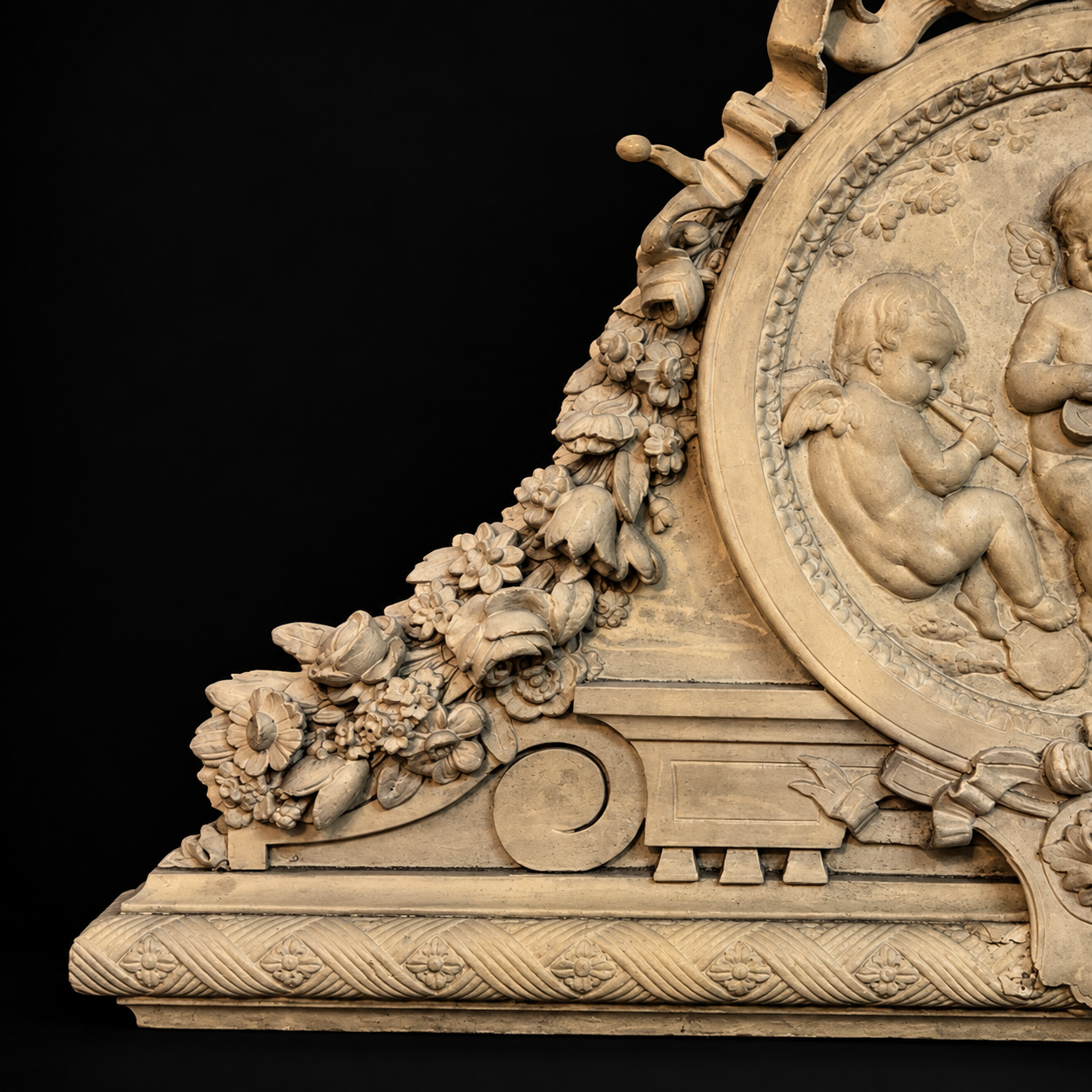
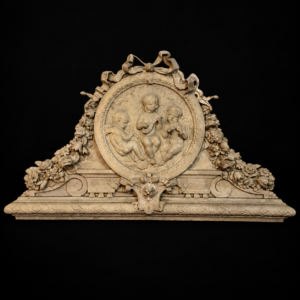
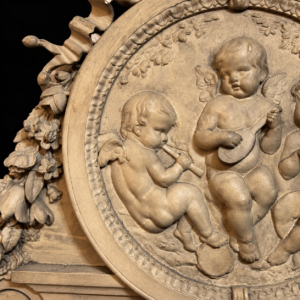
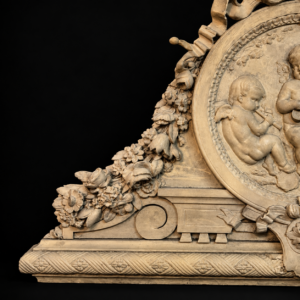
This spectacular Louis XVI style decorative crest, probably dating from the second half of the 19th century, features a neoclassical-inspired composition characterised by its strong symmetry and extraordinary richness of ornamentation.
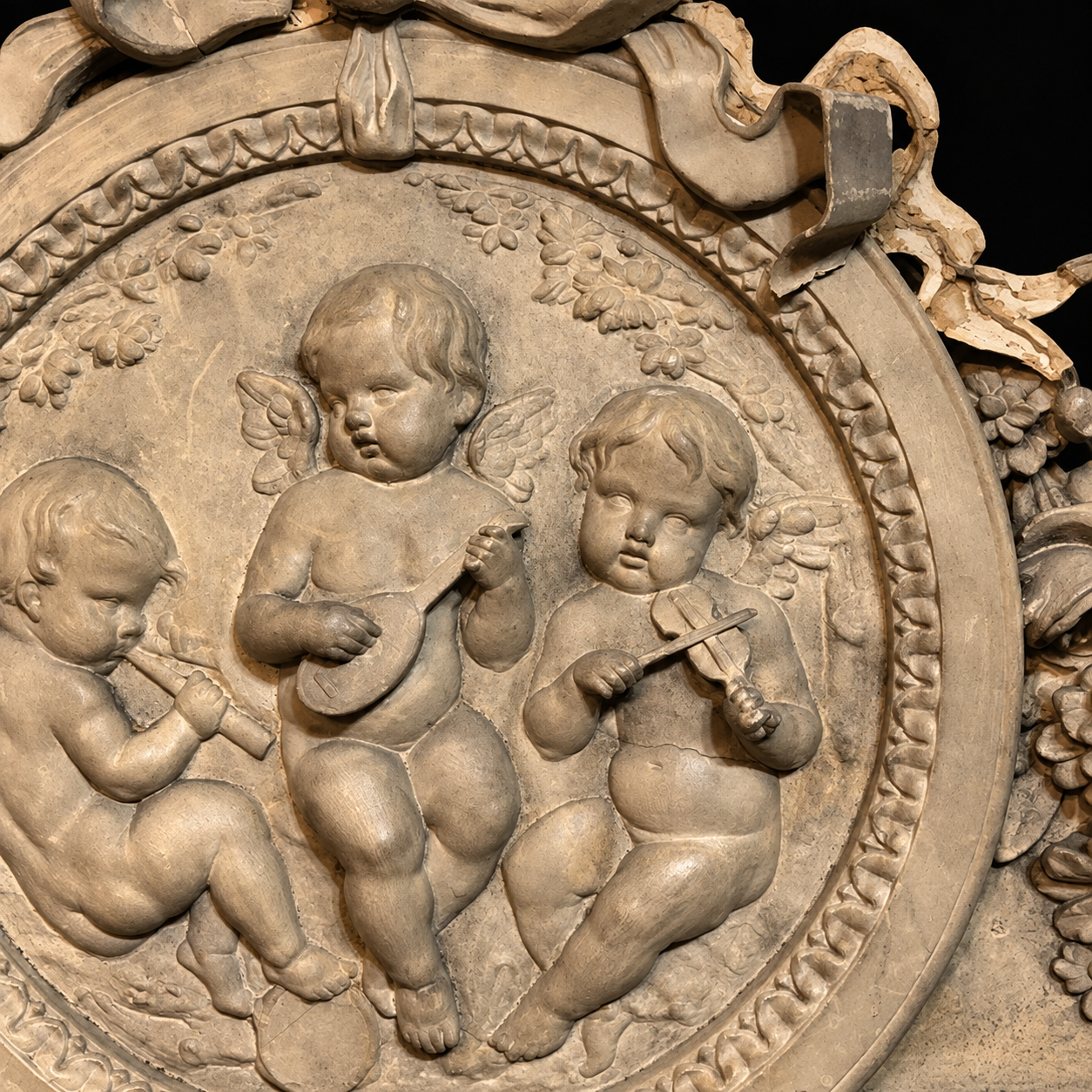
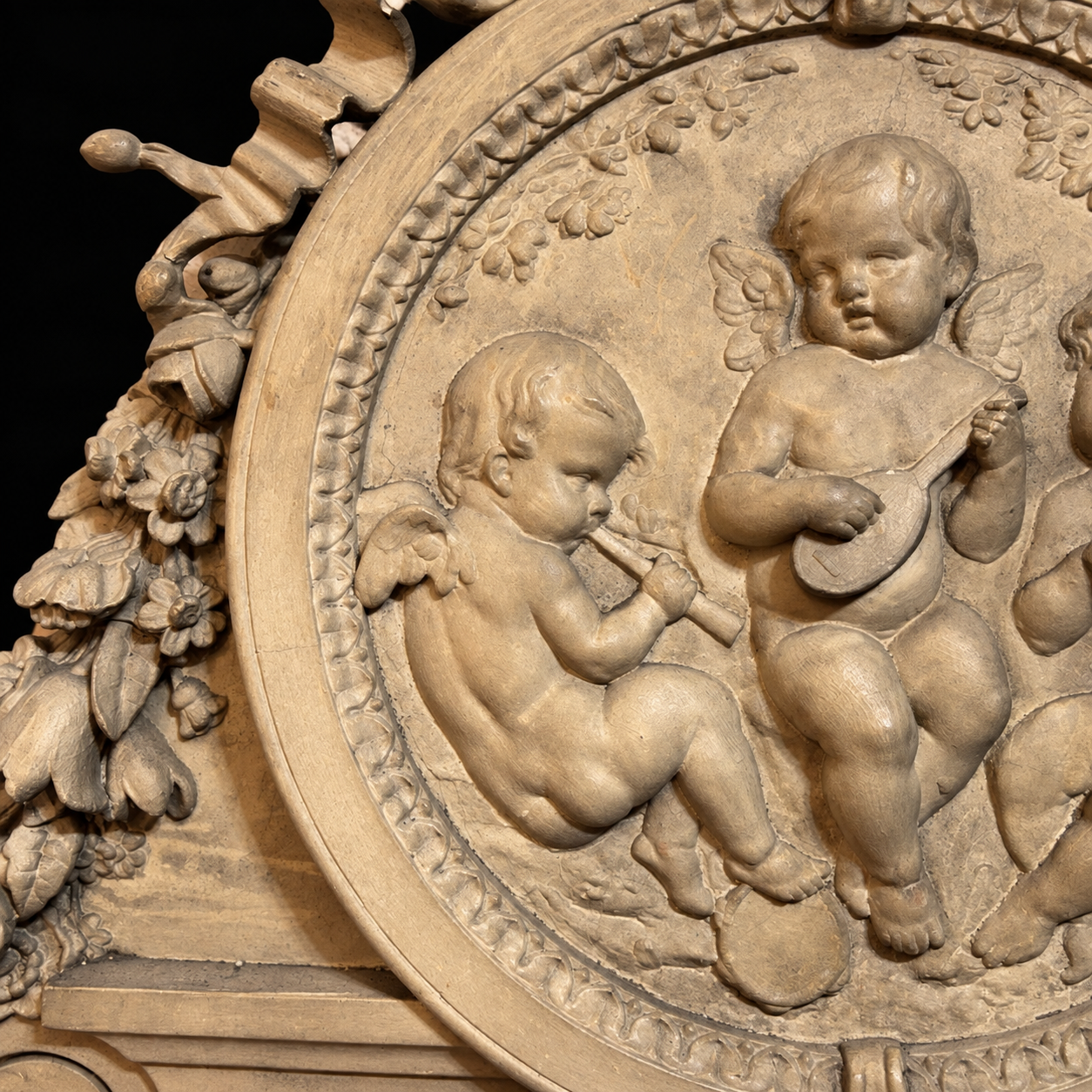
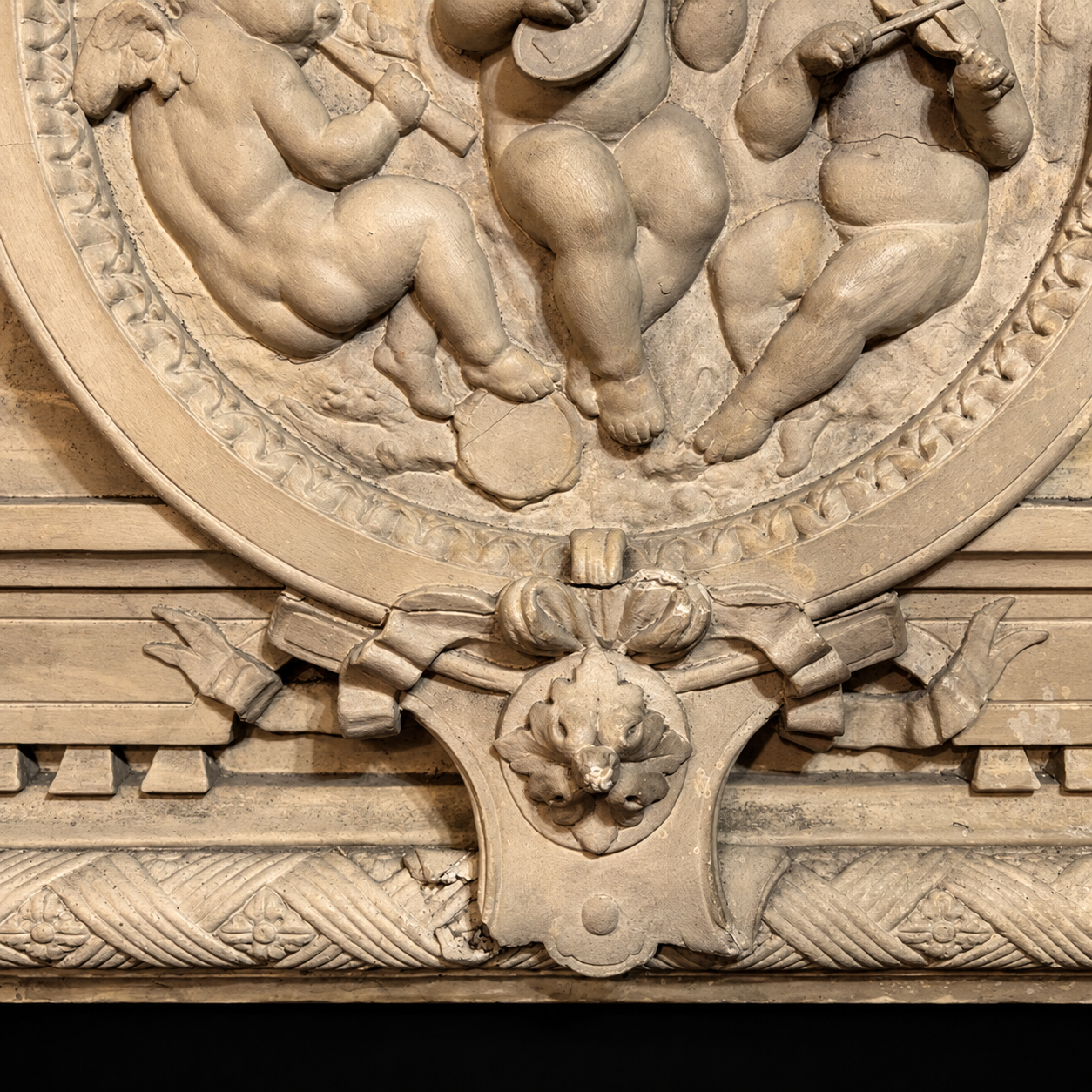
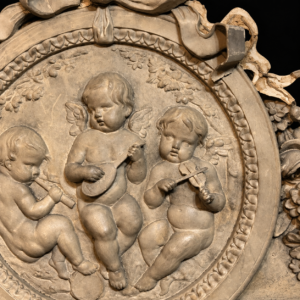
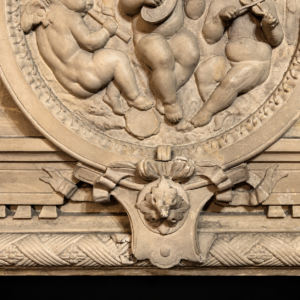
The composition is centred around a large circular medallion, within which three putti are depicted playing different musical instruments: a flute, a stringed instrument and a pan flute. The musical theme, together with the medallions, garlands and ribbons, belongs to the ornamental repertoire characteristic of the Louis XVI style.
The medallion is crowned by a large ribbon bow and surrounded by abundant garlands of flowers and leaves modelled in relief, cascading symmetrically towards both ends. Rosettes, scrolls, ribbons and a delicate braided border complete the particularly elaborate decoration.
Its aesthetic reflects the Louis XVI Revival that developed during the 19th century, when 18th-century French models were reinterpreted with more abundant ornamentation and a considerably more theatrical presence. Examples from the Napoleon III period frequently combine putti, floral garlands and Louis XVI decorative motifs in precisely this manner.
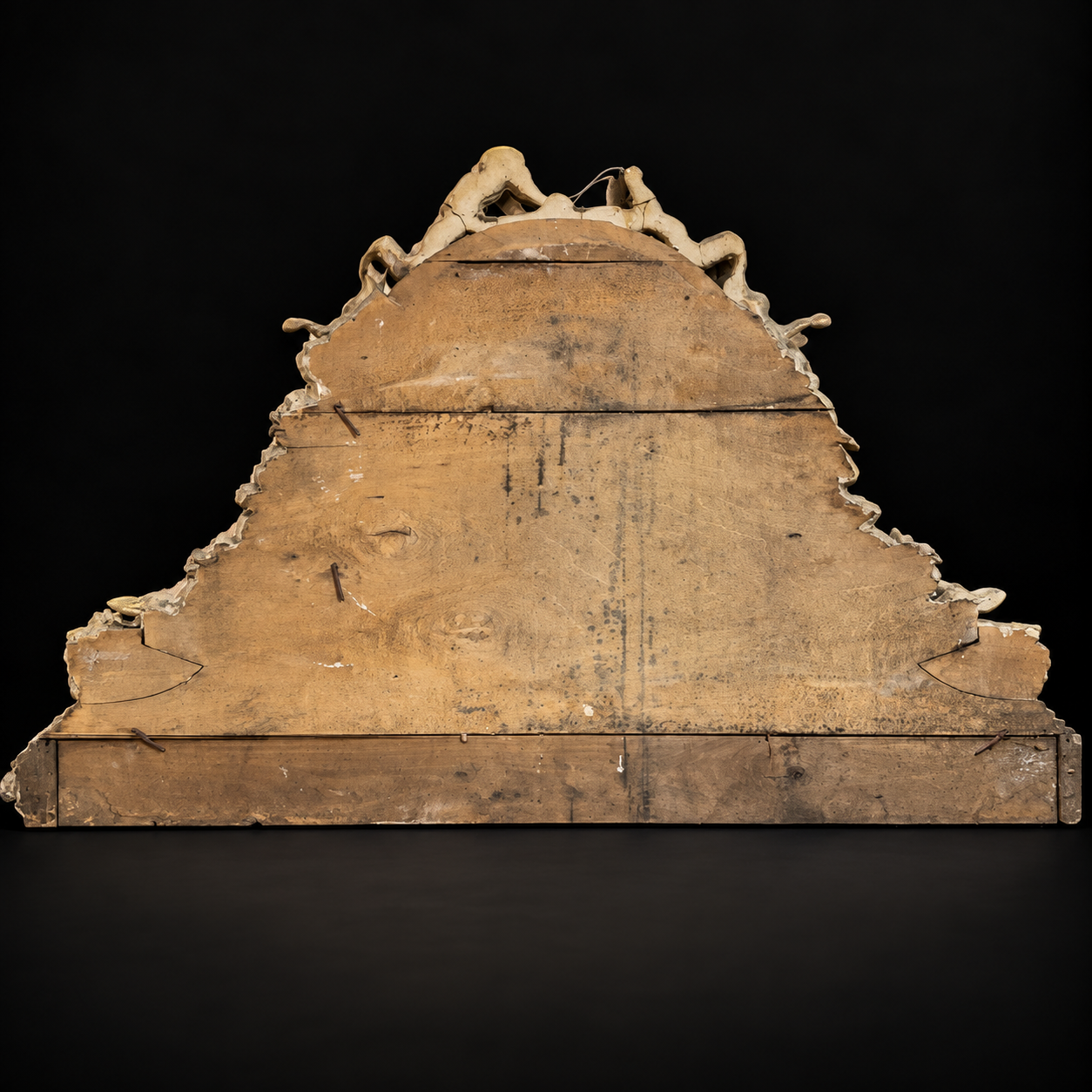
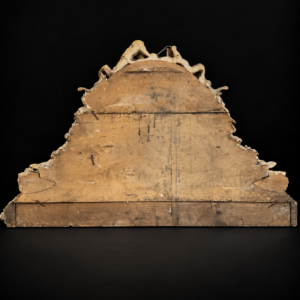
Originally conceived as an architectural or decorative crest, possibly associated with a piece of furniture, mirror, panelling or interior architectural element, it now functions as a magnificent sculptural piece in its own right. Its impressive scale and deeply modelled reliefs make it an exceptional element to display above a doorway, console table or directly on a wall.
A distinctive and highly decorative piece in which the delicacy of French neoclassical design is combined with the exuberance characteristic of 19th-century historicist reinterpretations.
This post is also available in: Spanish