

Description
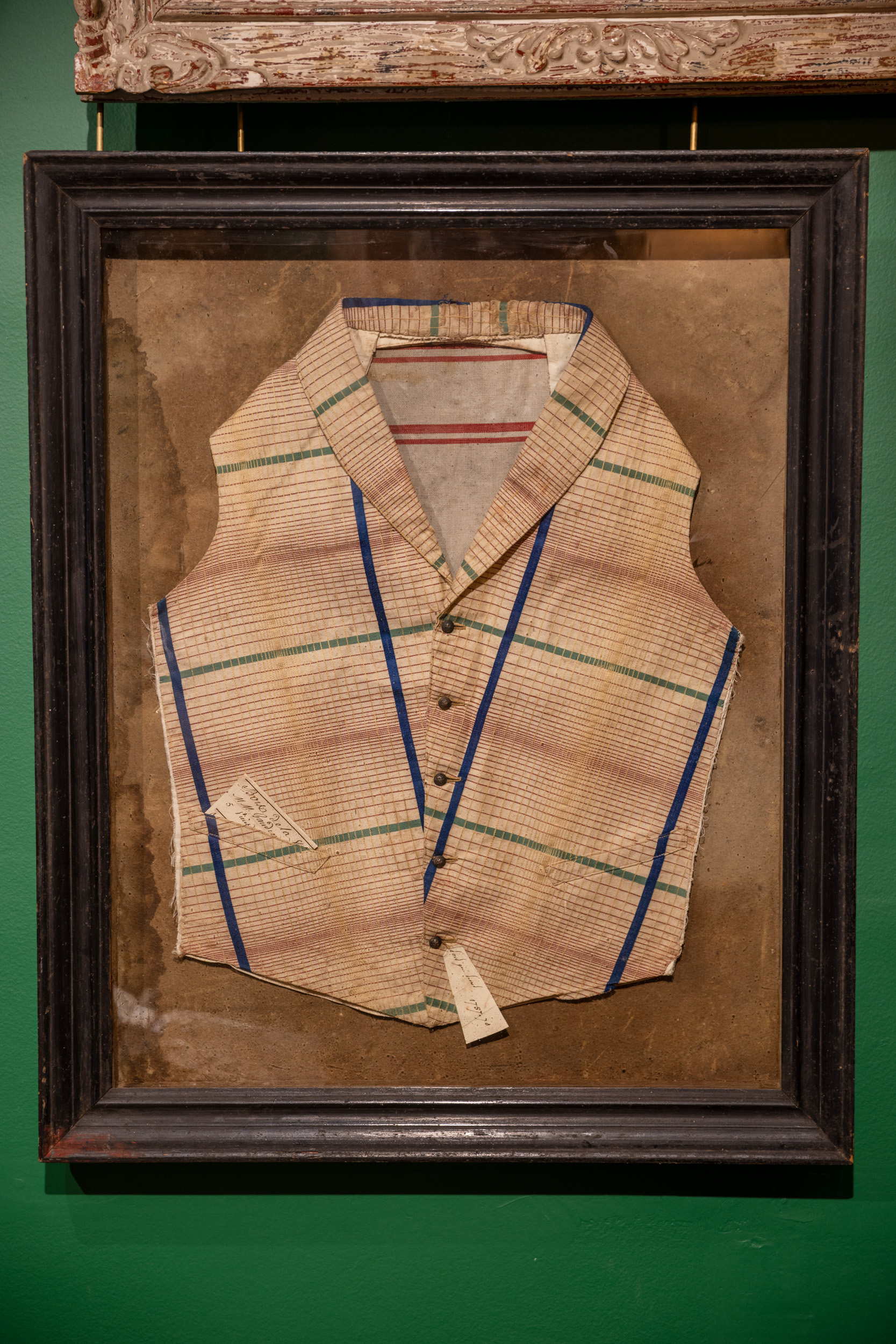
Suspended in time within its frame, this nineteenth-century French waistcoat preserves the quiet geometry of an era when clothing was almost an expression of identity. Its checked linen fabric, woven in warm ochre and muted blue tones, reflects the precision of traditional tailoring—that delicate balance between function and beauty that defined masculine elegance in the mid-nineteenth century.
Every woven line seems to tell a story: days measured by the ticking of a pocket watch, the ritual of fastening the buttons before stepping outside, the habit of carrying a folded note in a pocket—like the handwritten message that still peeks out from this garment, a silent witness to an intimate gesture.
In nineteenth-century France, a waistcoat was far more than an article of clothing. It represented respectability, but also transition—the space between public appearance and private life, between the rising middle classes and the established bourgeoisie. With its understated pattern and almost architectural texture, this one may once have belonged to a merchant, a schoolmaster, or perhaps a traveller crossing Europe by rail, carrying only what truly mattered.
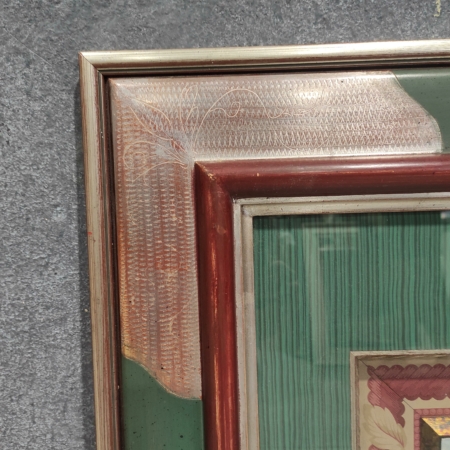
Now transformed into framed textile art, the waistcoat becomes a unique decorative piece. Its dark frame and earthy background emphasise the material itself: the aged linen, the gentle patina of time, and colours that have softened without losing their presence.
At Deco for Curious, an antique and vintage interiors gallery in Bilbao, we believe there are objects that do more than decorate—they preserve memory. This waistcoat does not seek perfection, but permanence. And within its silence lies a quiet beauty.