

Description
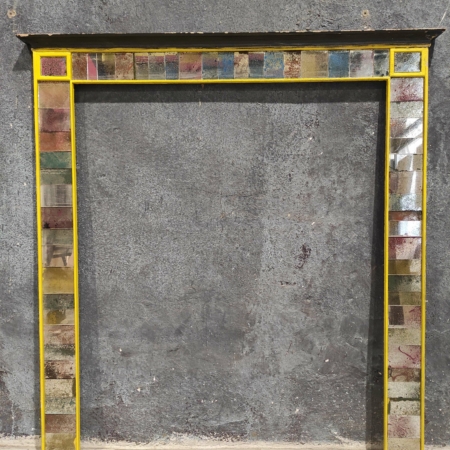
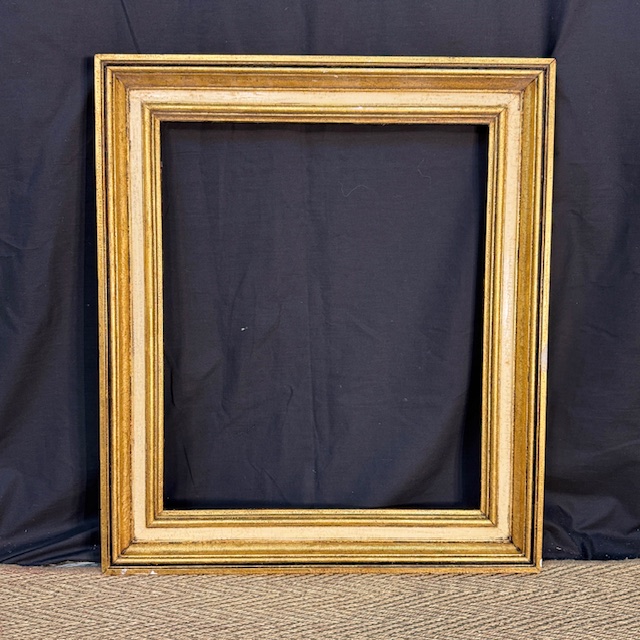
Some frames assert themselves through ornament.
This one works through proportion.
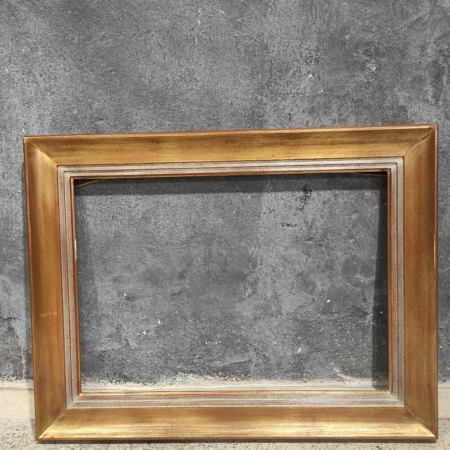
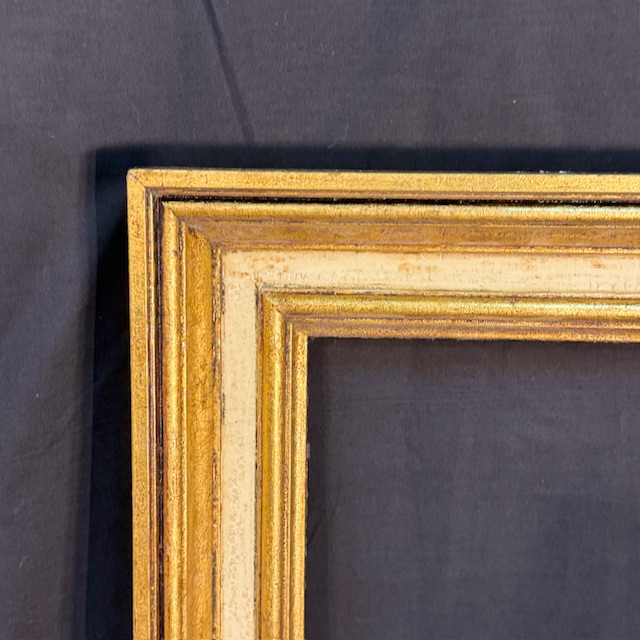
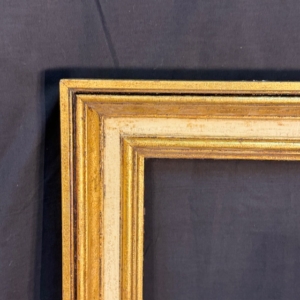
The double moulding—an inner band in off-white, an outer edge in muted gold—creates a measured distance between the wall and whatever it holds. The effect is not contrast but calibration. The white tempers. The gold steadies. Neither competes.
The wood shows subtle irregularities beneath the paint: faint shifts in texture, areas where the finish thins, others where it gathers. Nothing feels overly resolved. The surface carries time lightly, without affectation.
Frames of this kind belong to a practical tradition rather than a decorative one. They were designed to accompany an image, not to overpower it. This piece works particularly well with works on paper—drawings, prints, photographs—or paintings with restrained palettes, where the surrounding space matters as much as the image itself.
It is not antique, and it does not attempt to be. Its character is vintage in the most direct sense: well-made, gently aged, and still fully present in its purpose. On a wall, it does not call for attention. But once noticed, it holds it quietly.
This post is also available in: Spanish