

Description
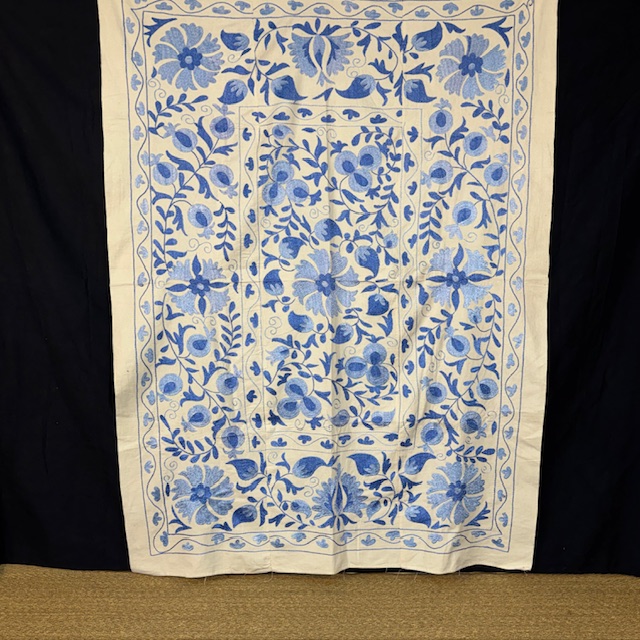
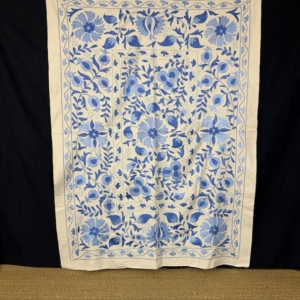
This beautiful hand-embroidered Suzani bedspread comes from Afghanistan and dates to around the 1940s, a period when such textiles formed an essential part of domestic and ceremonial dowries across Central Asia. The term Suzani derives from the Persian word suzan, meaning “needle,” and refers to richly embroidered textiles traditionally worked by hand on cotton or linen grounds.
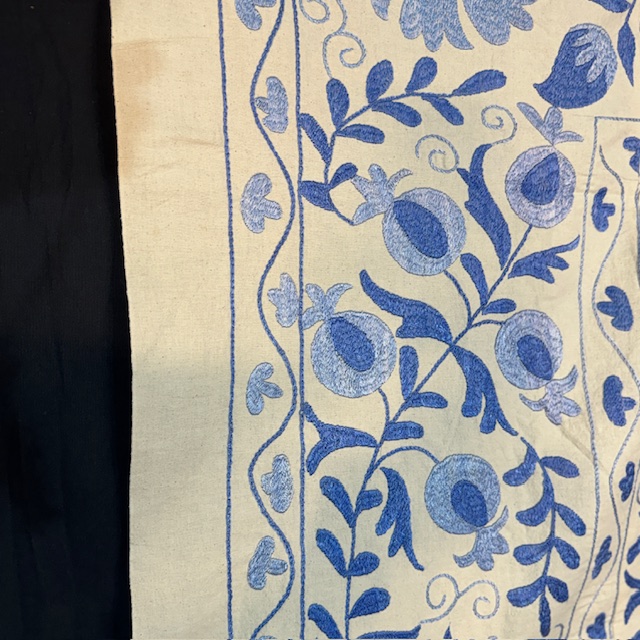
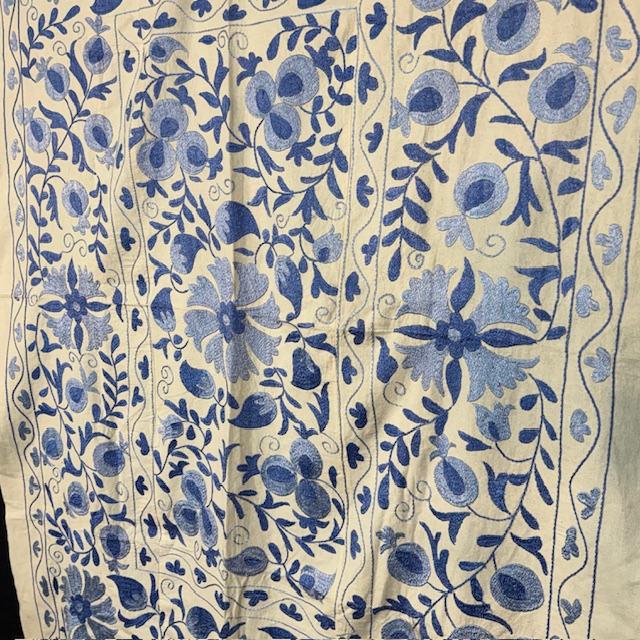
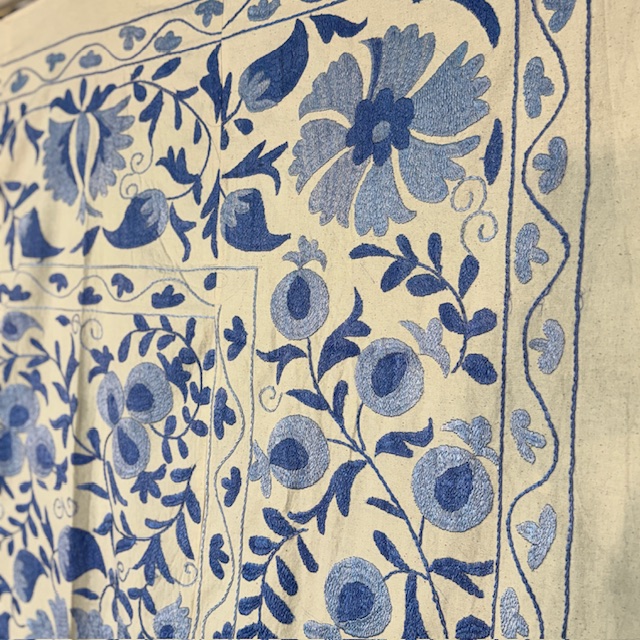
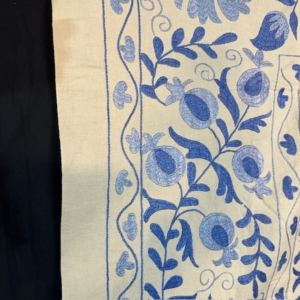
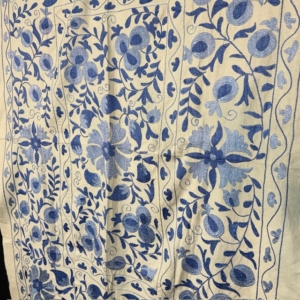
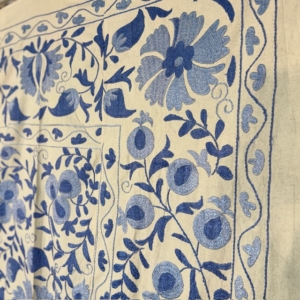
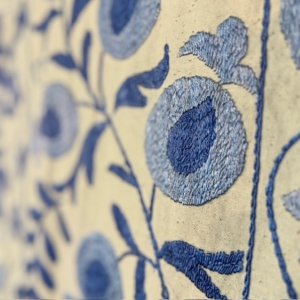
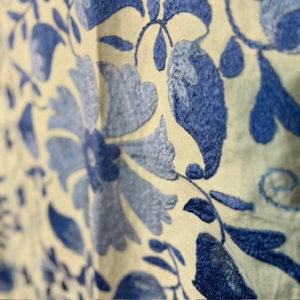
The design presents a balanced composition of floral and vegetal motifs embroidered in varying shades of blue, arranged in concentric panels that create a harmonious ornamental structure. This type of decoration reflects a symbolic tradition in which flowers, leaves, and organic forms evoke fertility, protection, and prosperity.
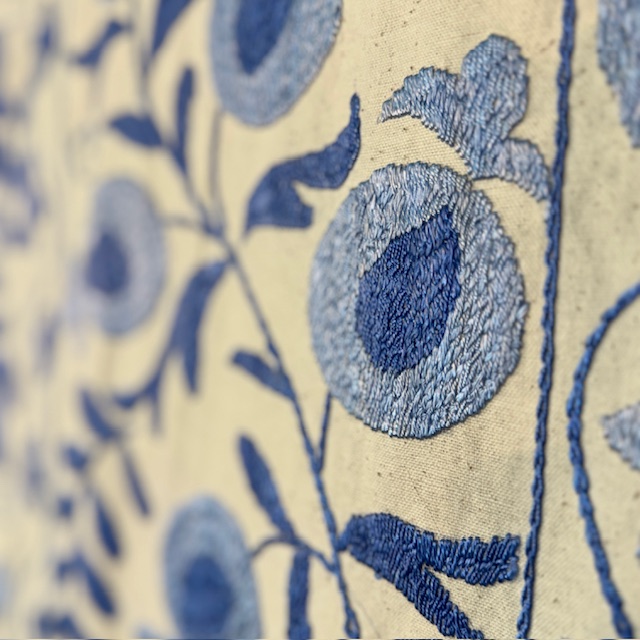
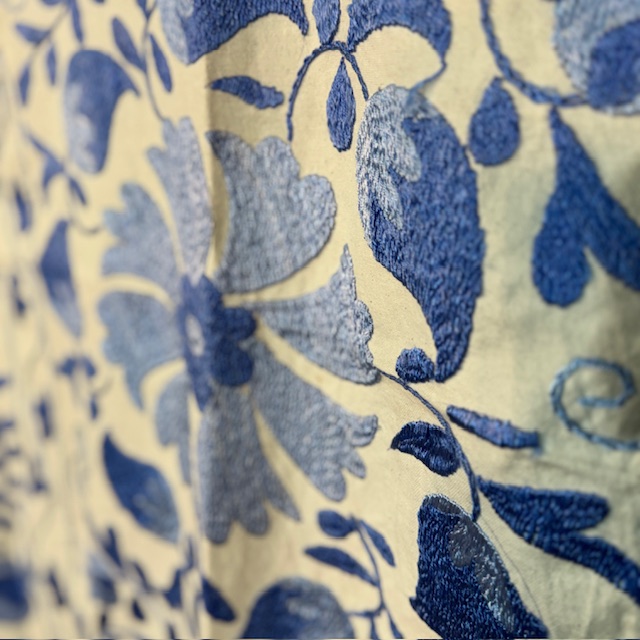
The silk embroidery brings a luminous and richly textured surface that contrasts gently with the light ground of the fabric. Each stitch reveals the meticulous work of the artisans who produced these pieces as part of family dowries, passing techniques and motifs from generation to generation.
Beyond its original function as a bedspread or textile covering, today such pieces are also appreciated as historical textile art. It can be used on a bed as a light cover or displayed as a wall tapestry, where its floral composition and delicate palette bring serenity and refinement to a space.
Origin: Afghanistan
Period: 1940s
Technique: Hand-embroidered Suzani
Material: Silk embroidery on textile ground
An exceptional piece that brings together tradition, history, and artisanal mastery, representing the rich cultural heritage of Central Asian textiles.
This post is also available in: Spanish