

Description
Some garments aren’t just worn — they’re lived in.
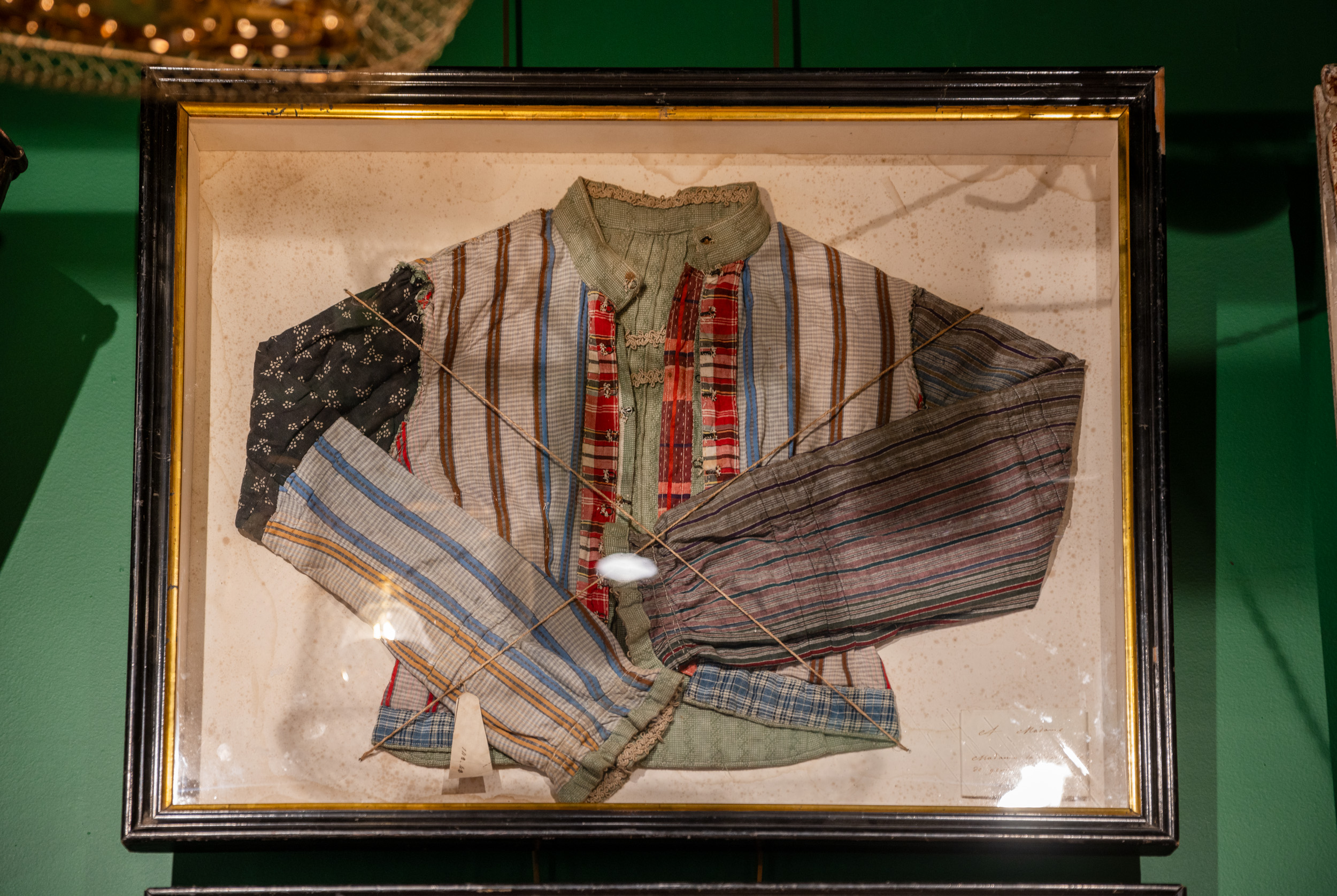
This French shirt from the 19th century, framed and preserved with care, seems to hold the quiet breath of the person who once wore it. The fabric, a soft blend of linen and cotton, carries the rhythm of daily life: its stripes fading like a memory, its texture worn by use and time.
Unlike the elegant clothing of the bourgeois salons, this shirt tells a simpler story — one of fields, workshops, and market days. It was never made to impress, but to accompany. To endure. And yet, that’s where its beauty lies — in its sincerity, in its work-worn grace.
Now, enclosed in an aged wooden frame, it becomes a piece of antique textile art — a unique object for vintage wall decoration that connects history, craft, and emotion. The colors and stitches whisper of lives that unfolded at a slower pace, when things were made to last, and even the smallest object carried meaning.
In 19th-century France, striped fabrics like this became popular as industrial looms met artisanal hands. They marked a new way of dressing: practical, modest, but never devoid of beauty. The rhythm of the pattern mirrors the rhythm of that time — between tradition and progress, the old and the emerging new.
At Deco for Curious, an antique shop in Bilbao, we believe that objects with history speak softly but deeply. This shirt doesn’t try to decorate; it remembers. Its quiet presence fills the space with something both fragile and enduring — the trace of life made visible.