



Description
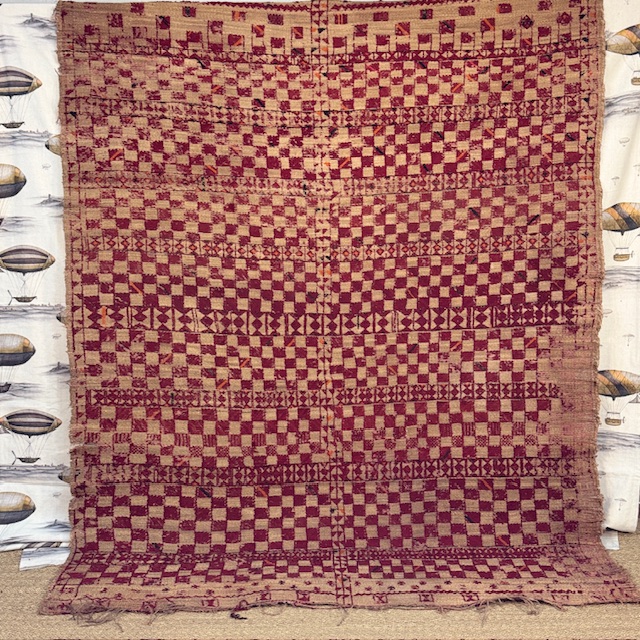
Some textiles don’t just fill a space — they shift it. This 1970s Berber hassira rug is one of those pieces that carries time woven into every strand, as if the material itself remembered the hands that shaped it.
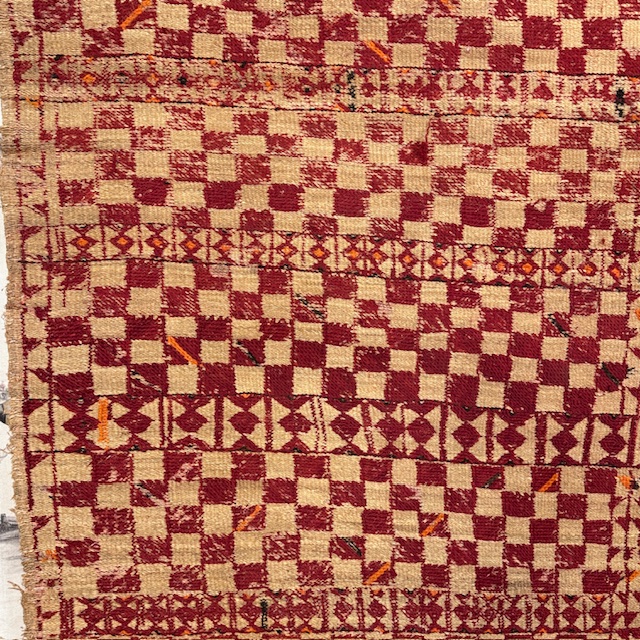
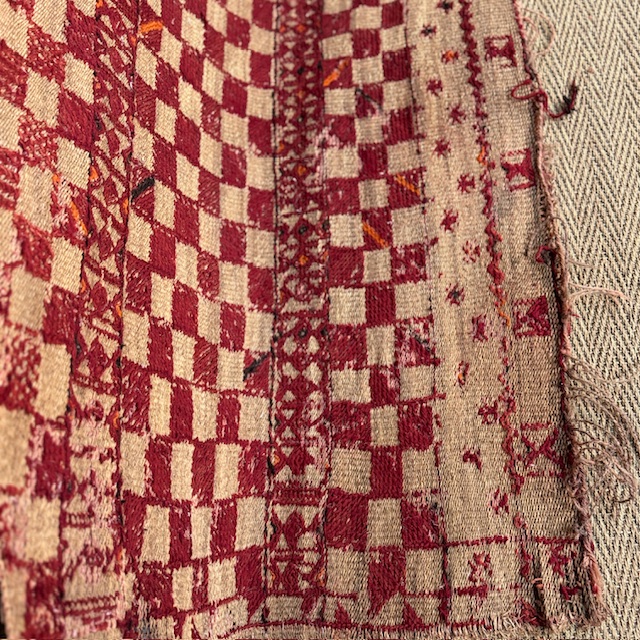
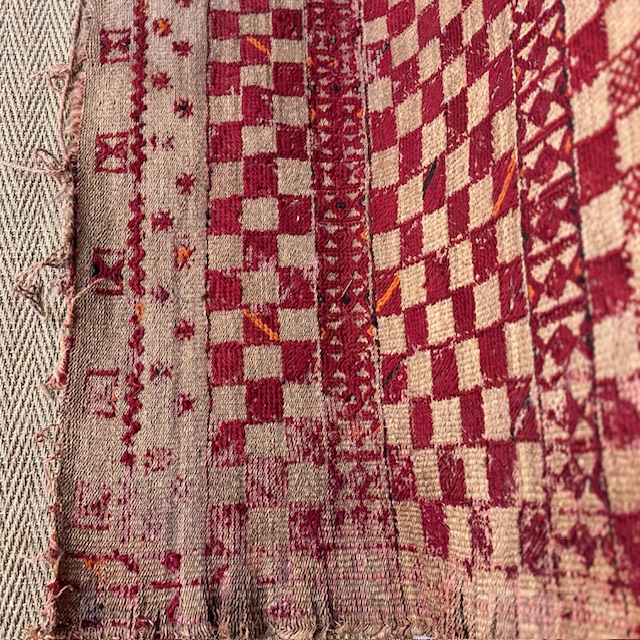
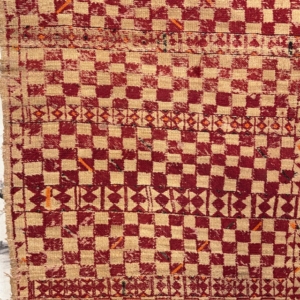
Made from hand-braided natural reeds, this rug follows a centuries-old Amazigh (Berber) tradition in which weaving is more than a craft: it is heritage, identity, and a form of storytelling passed from one generation of women to the next. On this organic base, artisans embroidered red geometric patterns in wool, squares that pulse like a visual rhythm rooted in North African culture.
Some of these motifs have softened with age, others stay vivid — together they create a texture that feels almost painterly. The wear is not damage; it is character, giving the piece a richness that new textiles can’t imitate.
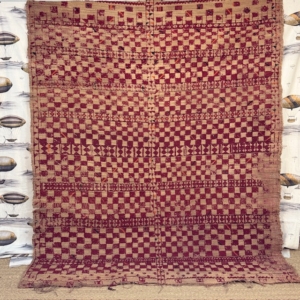
What makes this hassira especially versatile is how easily it becomes a wall tapestry. When hung vertically, its 208 × 308 cm surface reads like a monumental artwork: warm, graphic, and deeply human. It suits eclectic homes filled with vintage finds, contemporary interiors craving a natural touch, and spaces where craftsmanship matters as much as aesthetics.
Because it’s made from plant fibres and hand-embroidered wool, this rug is also an example of slow, sustainable craftsmanship — the kind that is disappearing. Bringing it home means giving new life to a textile tradition that travelled across decades, landscapes, and stories.
At Deco for Curious, we choose pieces like this because they hold something intangible: a quiet presence, a sense of memory, a beauty that grows with time. And this hassira has all of that woven into it.
This post is also available in: Spanish