

Description
Before gallery walls turned minimal and white, the frame carried weight—both visually and culturally. It was never a mere border; it was an architectural threshold between image and interior.
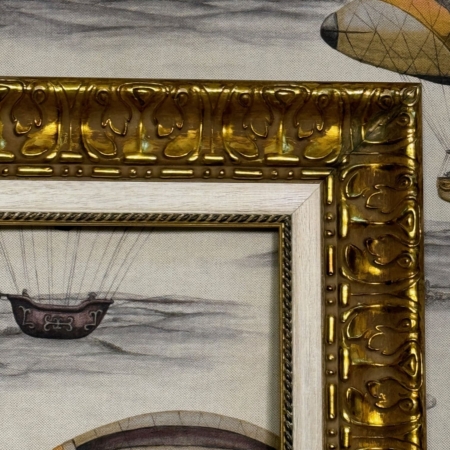
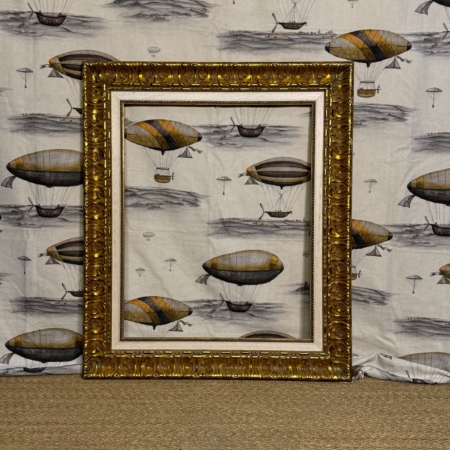
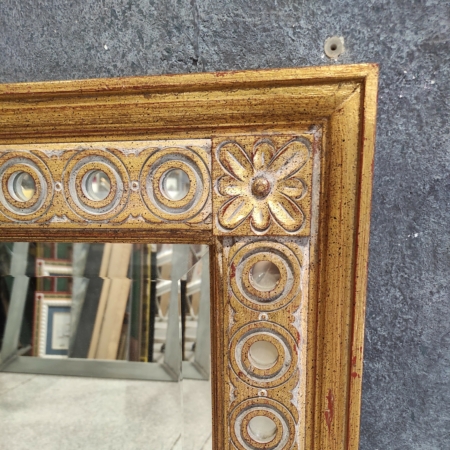
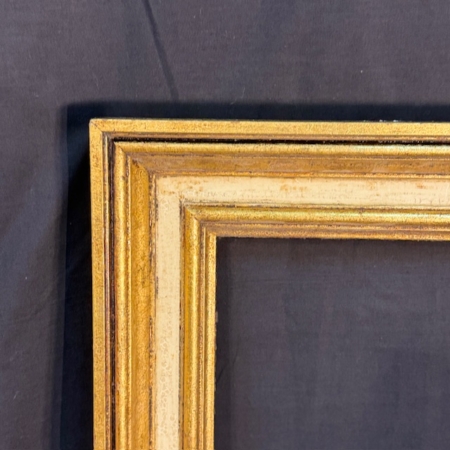
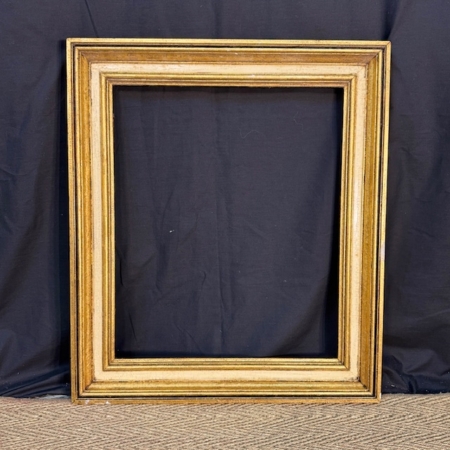
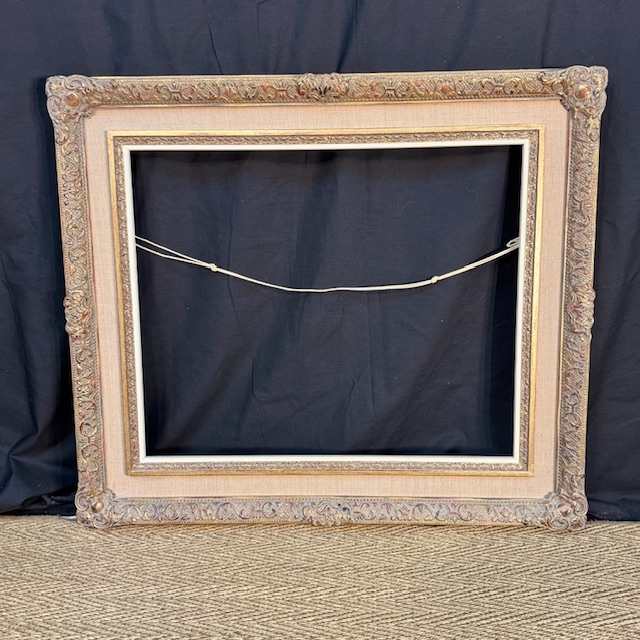
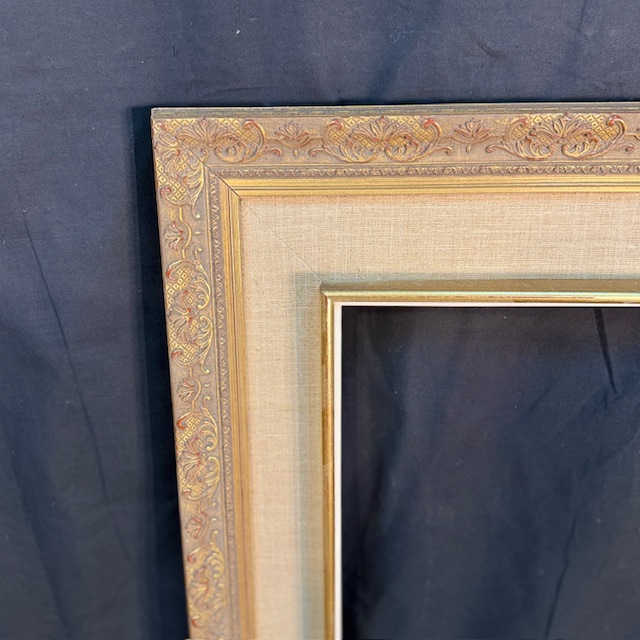
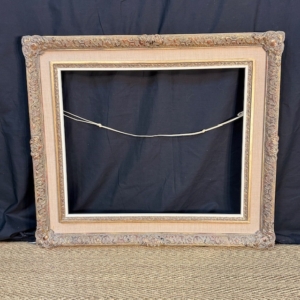
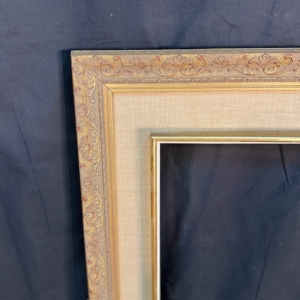
This large gilded wooden frame (82×70 cm) reflects that tradition. Its proportions are generous, designed to hold presence rather than disappear. The carved ornamentation follows a restrained vegetal rhythm, subtly concentrated at the corners, where the structure feels anchored and composed.
The gilded finish shows tonal variation: warmer depth within the recesses, softened highlights along the edges. The surface does not gleam excessively; it absorbs light, allowing texture and relief to emerge gradually. The slight patina lends the frame a sense of time—measured, not theatrical.
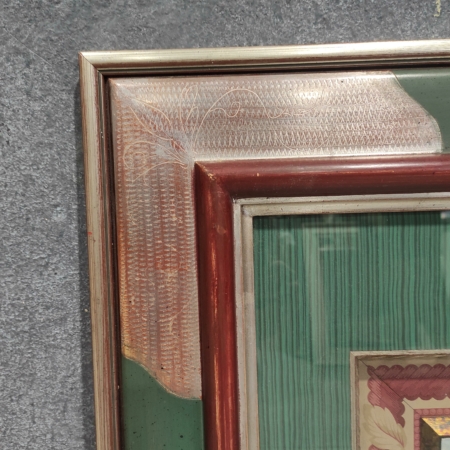
The fabric-lined mat introduces a quiet architectural pause. The visible weave adds dimension and depth, creating a layered transition before the artwork begins. This feature—common in late 19th- and early 20th-century European framing—adds sophistication without excess.
Its scale and character make it particularly suitable for:
-
Oil paintings
-
Large fine art prints
-
Portrait photography
-
Classical or contemporary artwork seeking contrast
-
Statement wall decor in traditional or eclectic interiors
Some frames merely surround an image. Others define how it is seen.
This post is also available in: Spanish