

Description
Some frames accompany a painting. Others quietly set the atmosphere of an entire room before the artwork even arrives.
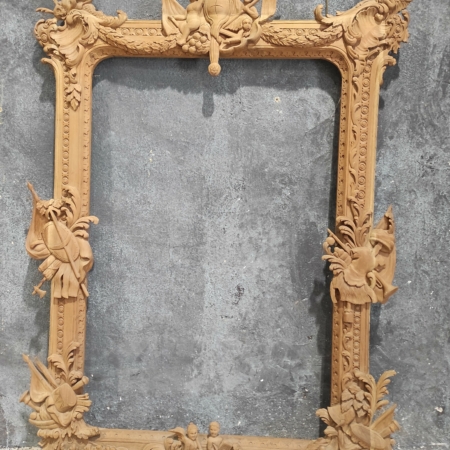
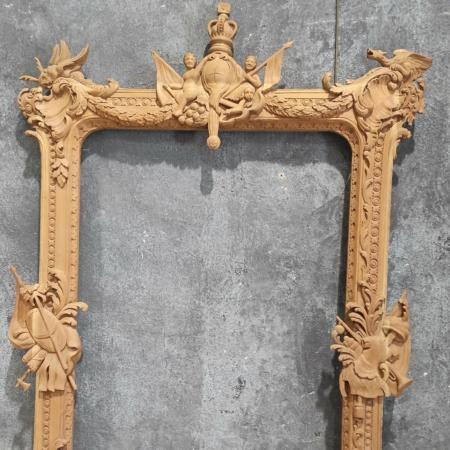
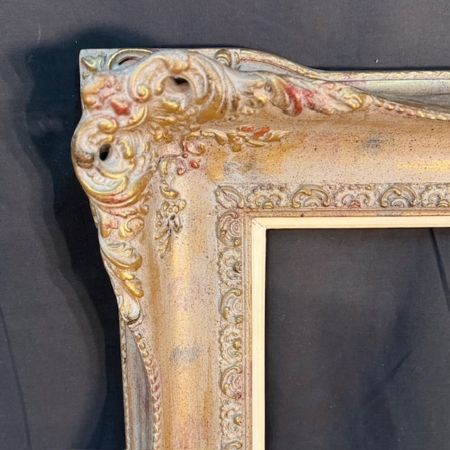
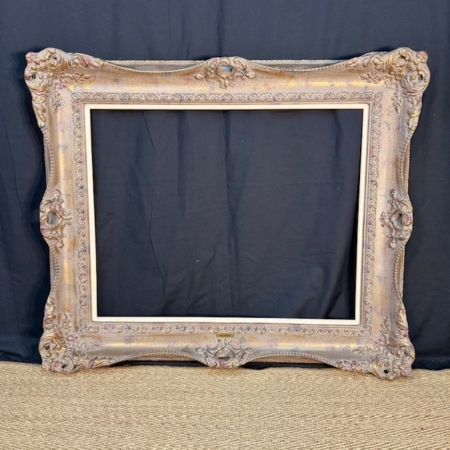
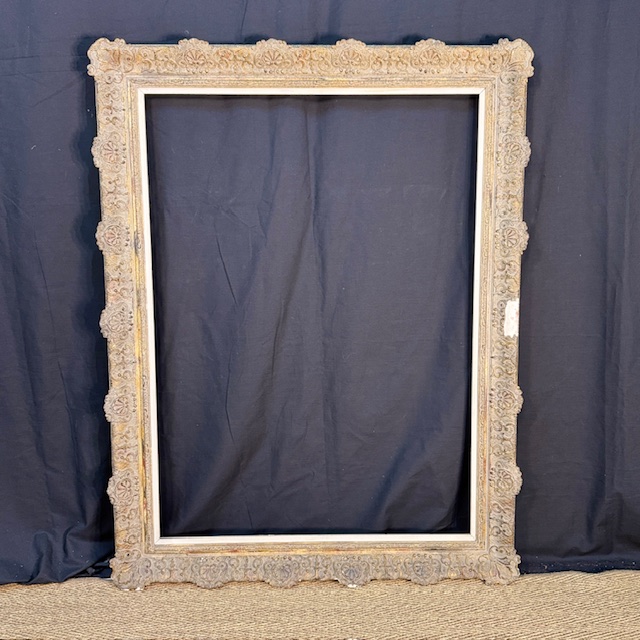
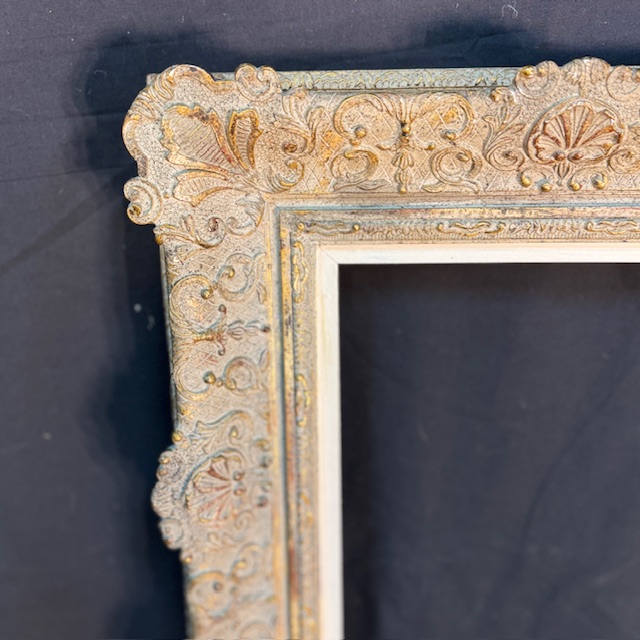
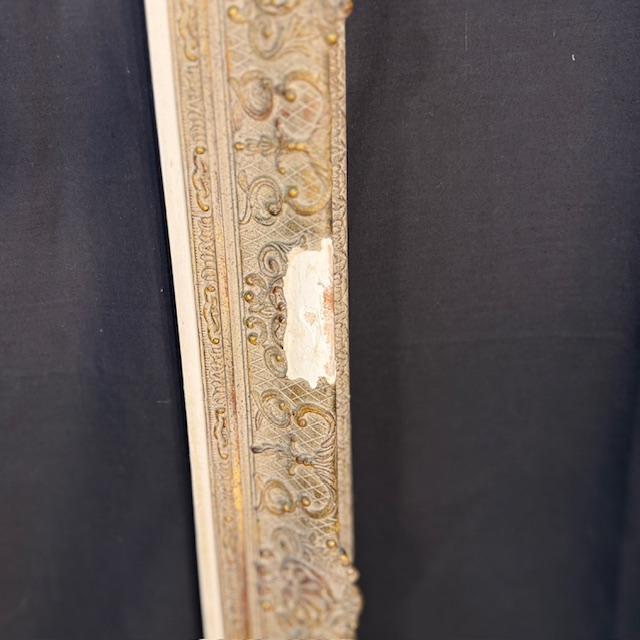
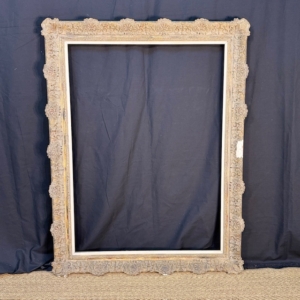
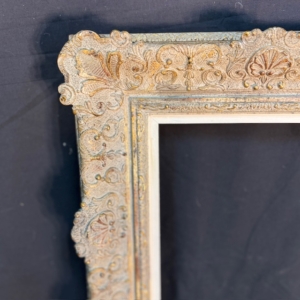
This generously scaled example (92 x 120 cm) belongs to the latter. The carving is abundant yet fluid: garlands, scrolling foliage, small shell motifs, and layered ornament unfold across the surface with a rhythm that feels almost textile. The wood has been shaped not for rigid symmetry, but for movement and visual depth.
Its current finish—softened to a warm ivory with subtle remnants of gilding—reveals time rather than conceals it. The surface is not uniform. There are softened edges, minor losses, areas where the paint has thinned and settled into the carving. The patina is natural and honest, the result of decades of light, handling, and interior life—not an artificial distressing technique.
Frames of this character were once used in late nineteenth- and early twentieth-century European interiors to dignify portraits, academic landscapes, and religious paintings. Today, they function just as confidently in contemporary spaces. It can hold a traditional oil painting, a modern abstract canvas, a large mirror, or even stand intentionally empty as a decorative architectural element.
The vertical format makes it particularly suitable for large-scale artwork or statement wall pieces. It is not discreet, yet it avoids excess. Its presence comes from proportion, carving, and surface history.
In a curated antique shop specializing in antique picture frames, vintage decor, and architectural salvage, a piece like this tends to attract collectors, interior designers, and art lovers looking for an authentic antique gilded frame with genuine patina.
Even without an image inside, it already suggests one.