

Description
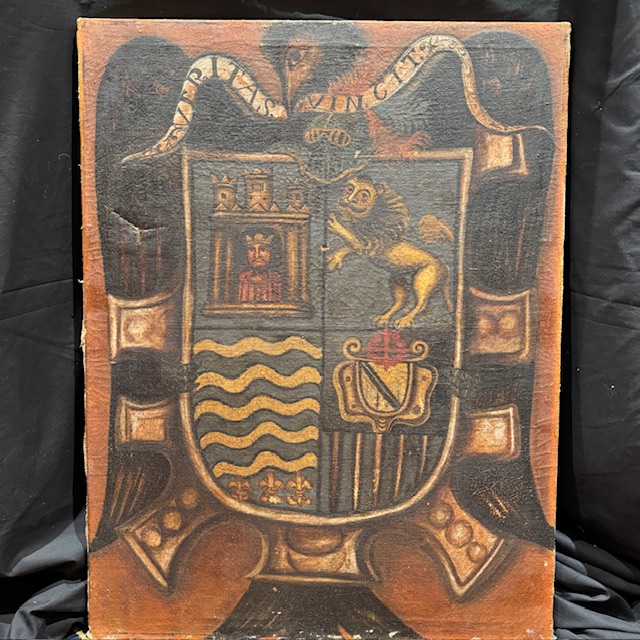
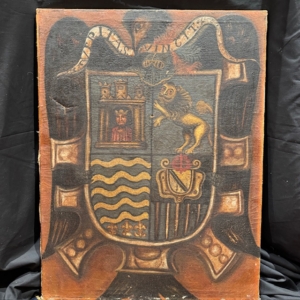
Some artworks don’t simply hang on a wall—they take possession of the room. This 17th-century heraldic canvas from the Colonial School carries that kind of presence, the quiet weight of objects that have travelled across centuries, gathering more stories than they can easily reveal.
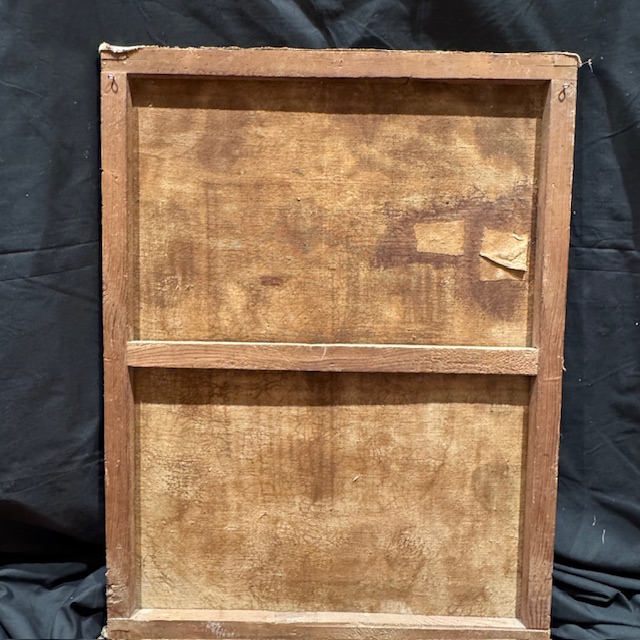
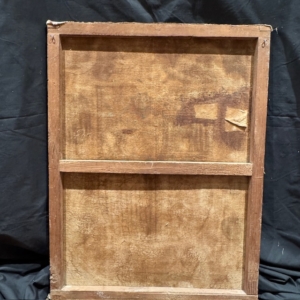
We discovered it in Palma de Mallorca, resting in a corner as if waiting for someone patient enough to decode it. The surface shows a gentle craquelure, like an old map where time has drawn its own routes and forgotten borders.
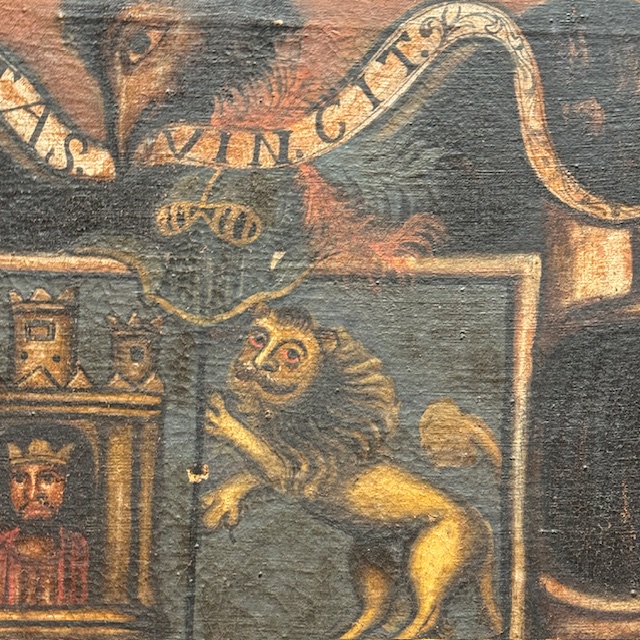
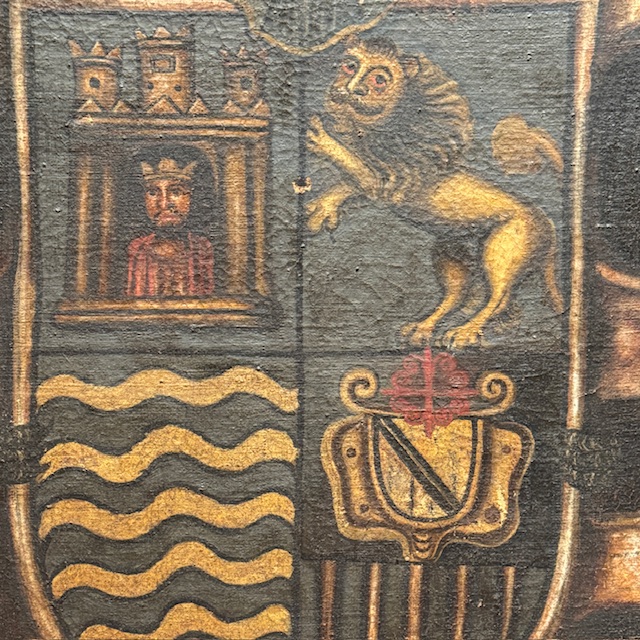
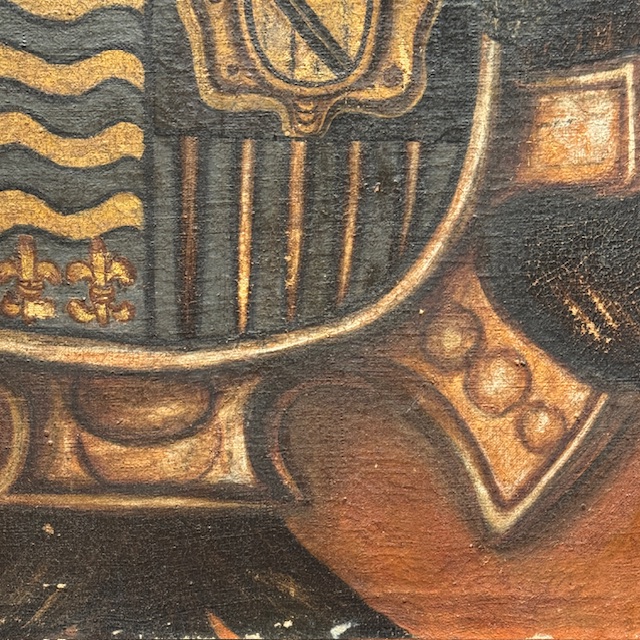
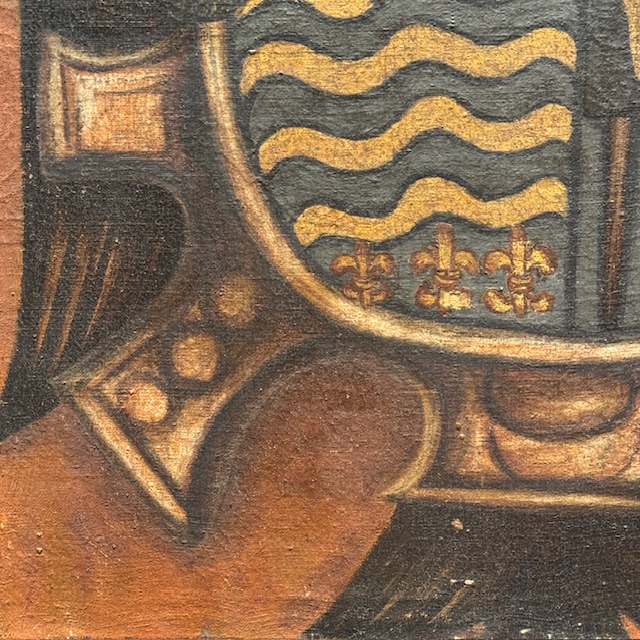
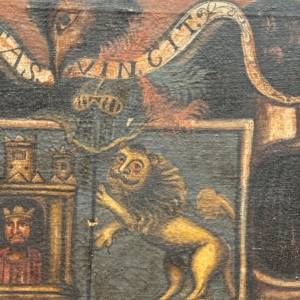
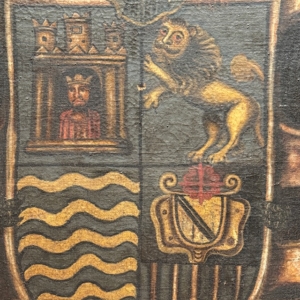
At the center, the coat of arms unfolds like a small symbolic theatre. The rampant lion, proud and slightly mischievous, seems to step forward with a gaze more expressive than expected. Beside it, a crowned figure inside a tower observes the scene—rigid yet strangely alive. And beneath them, the undulating golden lines hint at rivers, tides, or territories once claimed and defended.
Across the top, a softly curling ribbon still keeps traces of a Latin inscription. A phrase that has survived four centuries, legible or not, and whose presence feels as important as its meaning.
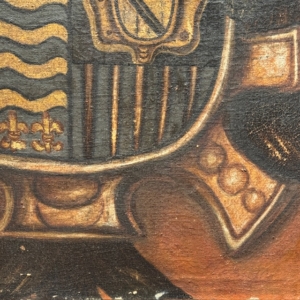
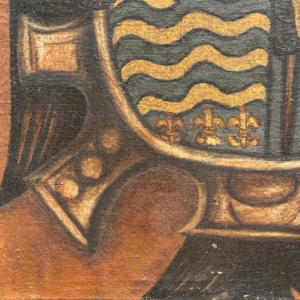
The painted border, almost architectural in form, is characteristic of the Colonial School aesthetic, where European heraldry blended with American influences, creating unique hybrids of style, symbolism and craftsmanship.
It is not a perfect piece; no object that has lived this long could be. The softened edges, the worn pigments, the texture of age—all of it deepens its personality rather than diminishing it. One wonders who commissioned this shield, in what home it once hung, and what version of history it was meant to protect.
The canvas doesn’t answer. It simply invites you to wonder.
This post is also available in: Spanish